Mercedes-Benz will auction a rotary-powered C111 prototype in 2027
Mercedes-Benz will sell a C111-II for the first time at RM Sotheby’s Rétromobile Paris auction on 3 February 2027, with proceeds supporting the Mercedes-Benz Museum’s redevelopment.
By CarNews247 Reporter ·
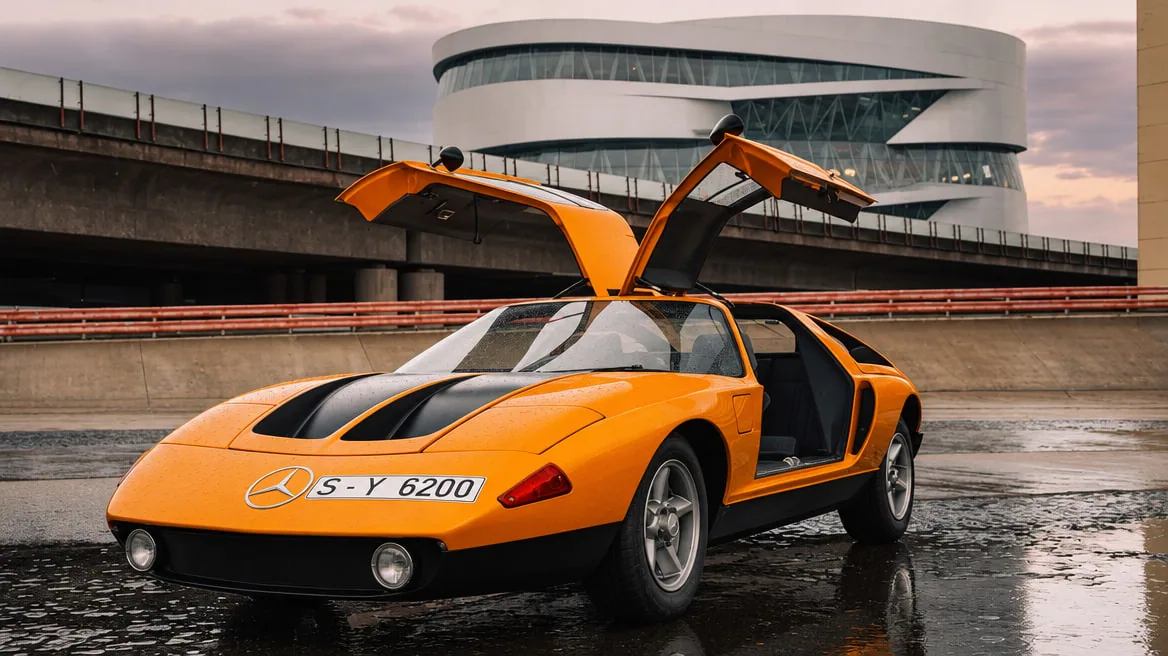
Mercedes-Benz will auction one of its C111 experimental cars for the first time, offering a rotary-powered C111-II prototype from its own collection at RM Sotheby’s Rétromobile Paris sale on 3 February 2027. The sale will take place in the Salles du Carrousel at the Palais du Louvre.
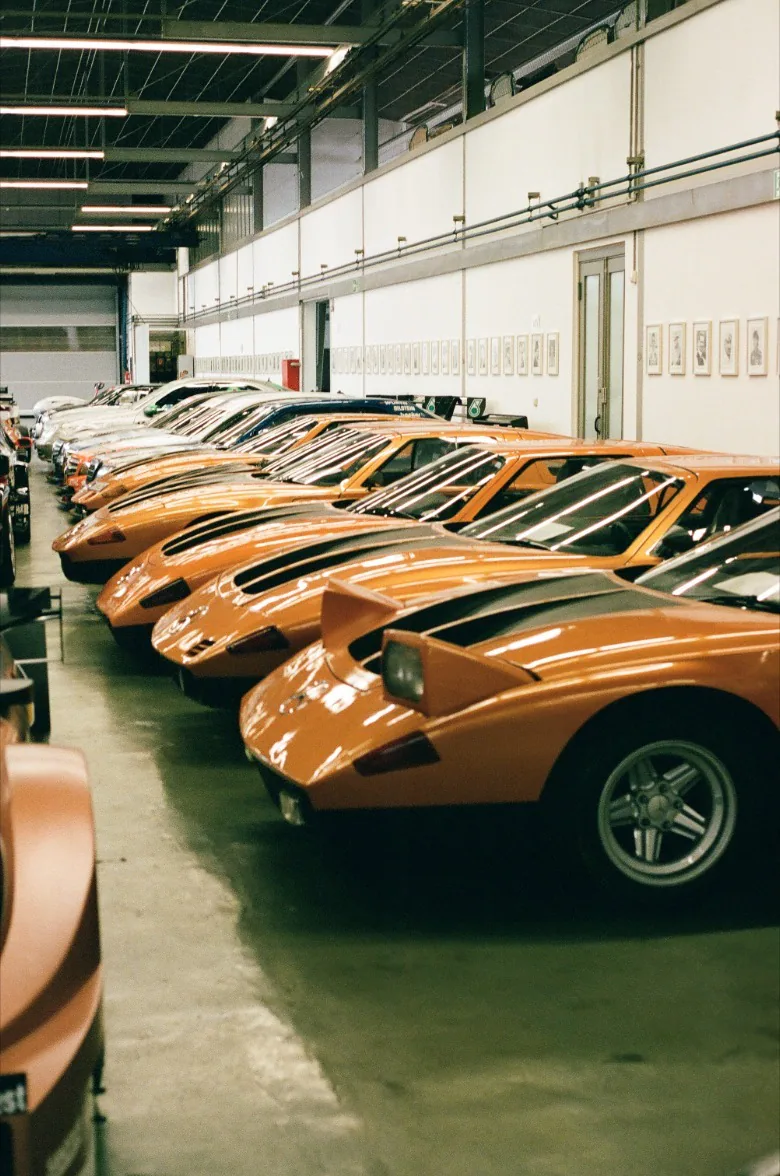
The car is known internally as Car 33, a designation Mercedes says has no significance beyond its records. More importantly for collectors, it is one of just 17 C111 prototypes built between 1969 and 1978, and Mercedes has contractually committed not to sell another example for at least 25 years.
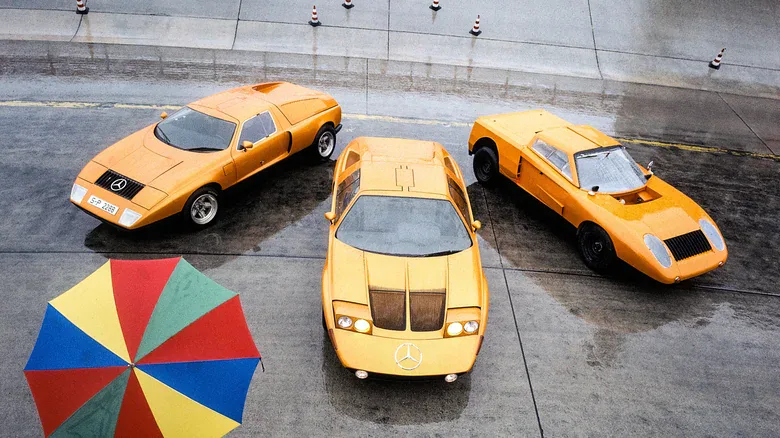
That makes this rather more significant than the usual auction catalogue entry. Mercedes has retained the surviving C111s in its collection until now, even though the gullwinged prototypes attracted considerable interest when they were new and never reached series production.
A test car, not a production supercar
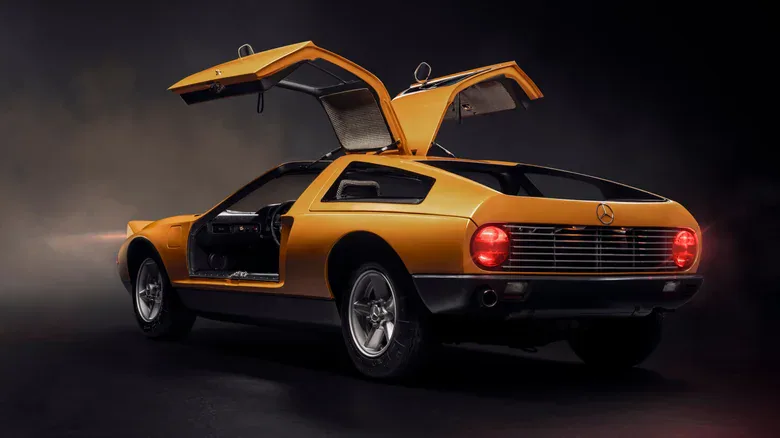
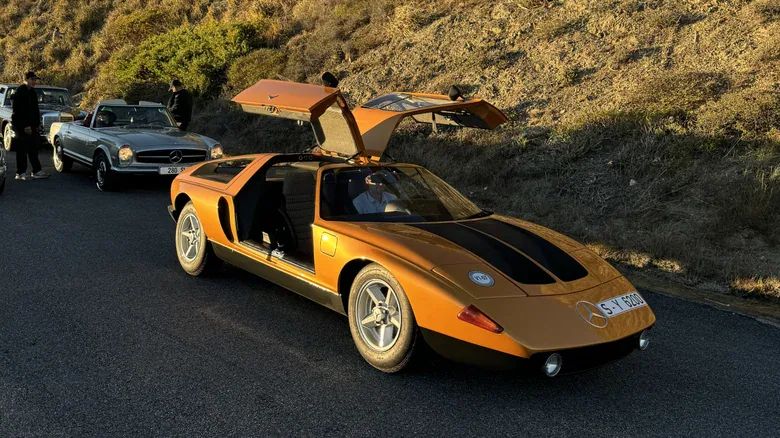
The C111 first appeared at the 1969 Frankfurt motor show as a rolling laboratory for new Mercedes engineering. Its glass-fibre-reinforced plastic body, mid-mounted engines and sharply wedged shape were a considerable departure for a company then best known for formal saloons and the 300 SL’s rather different interpretation of gullwing doors.
Mercedes developed the programme through C111-I, C111-II and C111-III versions. Early cars used rotary engines, while later prototypes explored V8 and five-cylinder turbodiesel power; the diesel C111-IIIs subsequently set records at Nardò. Of the 17 cars built, one was crash-tested and three were dismantled, leaving 13 examples in the Mercedes collection.
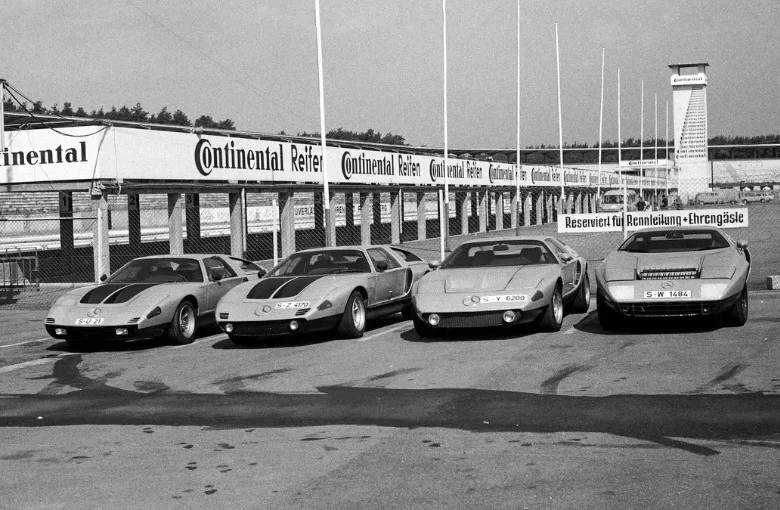
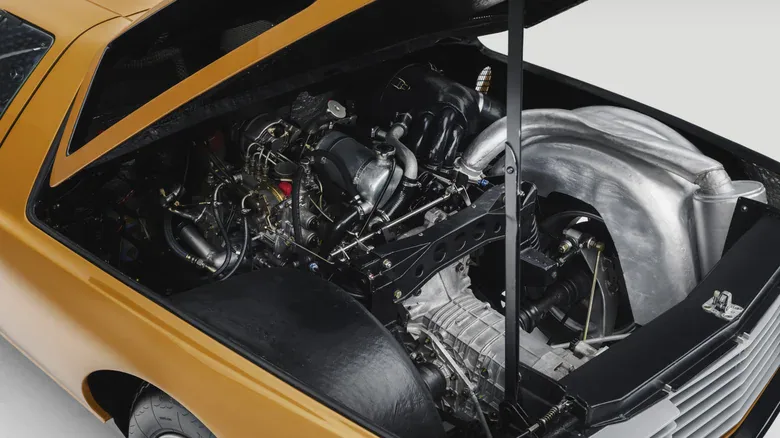
Car 33 was built in 1970, completed in August and entered Mercedes’ experimental fleet. It retains its original 2.4-litre four-rotor Wankel engine and five-speed manual gearbox. Sources differ slightly on its stated output: it has been reported as 345 hp (257 kW) and 289 lb ft (392 Nm), while another account gives 350 hp. All agree on a claimed 300 km/h top speed.
The car’s work was thoroughly practical, if not especially glamorous. Mercedes used it to evaluate a fluidic component intended to empty its two side-mounted fuel tanks evenly, measure temperatures in the rear luggage compartment and carry out test drives at Hockenheim. It was also used during early anti-lock braking system testing, although its ABS is not operational today.
Car 33 became a more public face of the programme in 1972, when it appeared in the first German edition of Playboy. It entered the company collection in 1975 and has been displayed in the Mercedes-Benz Museum’s Fascination Design area since the museum opened in 2006.
Restored, but not rewritten
Mercedes-Benz Classic restored the car to roadworthy condition at its Fellbach facility in 2024. The mechanical work included an overhaul of the drivetrain, while the Weißherbst exterior finish and grey-and-white houndstooth cabin were deliberately left with their original patina. A fire-extinguisher system was installed in the engine compartment.
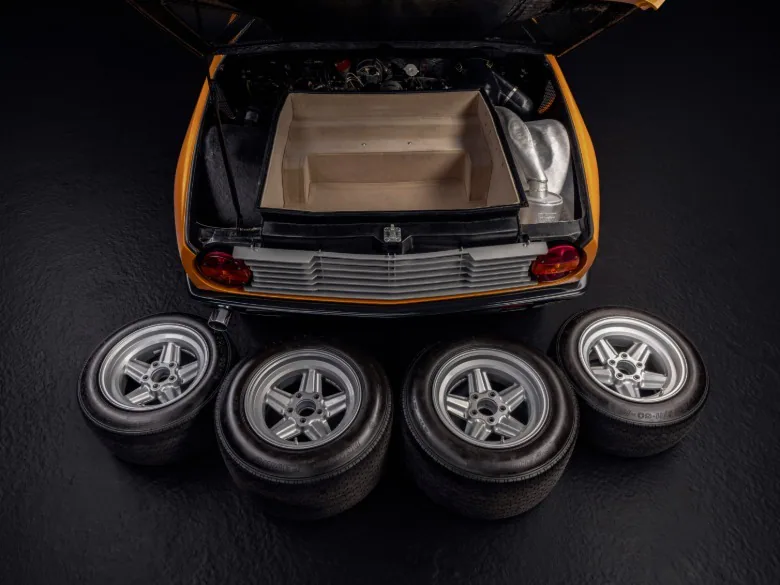
The odometer reads 24 766 km. The car will be supplied with its original 10x15-inch front and 13x15-inch rear magnesium wheels, though these are now for display only. It also has a newer set of 8x15-inch light-alloy wheels for driving, along with its removable rear luggage tray. Its vertically mounted Becker Europa radio remains in place as well.
Mercedes has not published an estimate. Marcus Breitschwerdt, chief executive of Mercedes-Benz Heritage GmbH, said in an interview that the company expects a substantial result.
“We do believe it will come to a significant double-digit euro [price at auction],” said Marcus Breitschwerdt, CEO of Mercedes-Benz Heritage GmbH.
RM Sotheby’s president Gord Duff put a firmer floor under expectations, saying the C111 should sell for more than €25 million. That remains an expectation rather than an auction result, but the sale follows Mercedes’ 2022 disposal of a 1955 300 SLR Uhlenhaut Coupé for €135 million.
All proceeds from Car 33’s sale will support Mercedes-Benz Museum 2.0, a programme covering development of the Stuttgart museum and its digital offerings. A central part of the plan is a digital twin of the museum, being developed with The Classic Car Trust and its Roarington platform, intended to give visitors virtual access to the collection.
Bidding will be available in person, subject to prior registration, or by telephone. For the eventual buyer, the prize is not merely an extremely scarce Mercedes prototype. It is the sole C111 Mercedes is prepared to part with until at least 2052 — and one whose four-rotor engine still has the unusual task of making a 1970s experiment earn its keep.
Sources: Jalopnik, Motor1.com and Road & Track