BMW’s electric M3 prototype brings four motors and 838bhp
BMW has revealed more of its 2027 M3 EV, which uses four independently controlled motors, around 838bhp and unusually powerful regenerative braking. Customer deliveries are expected in summer 2027.
By Rudi Louw ·
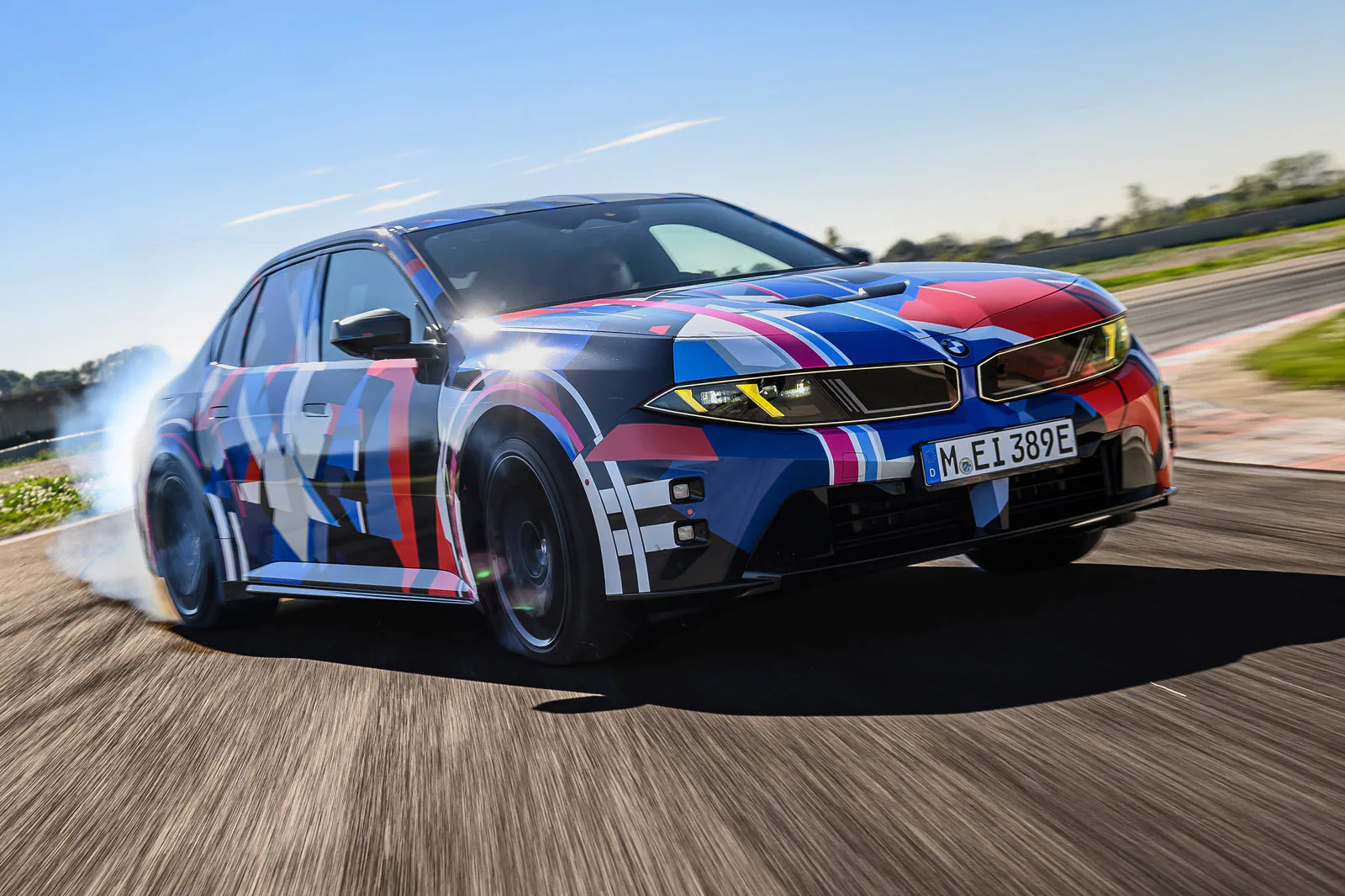
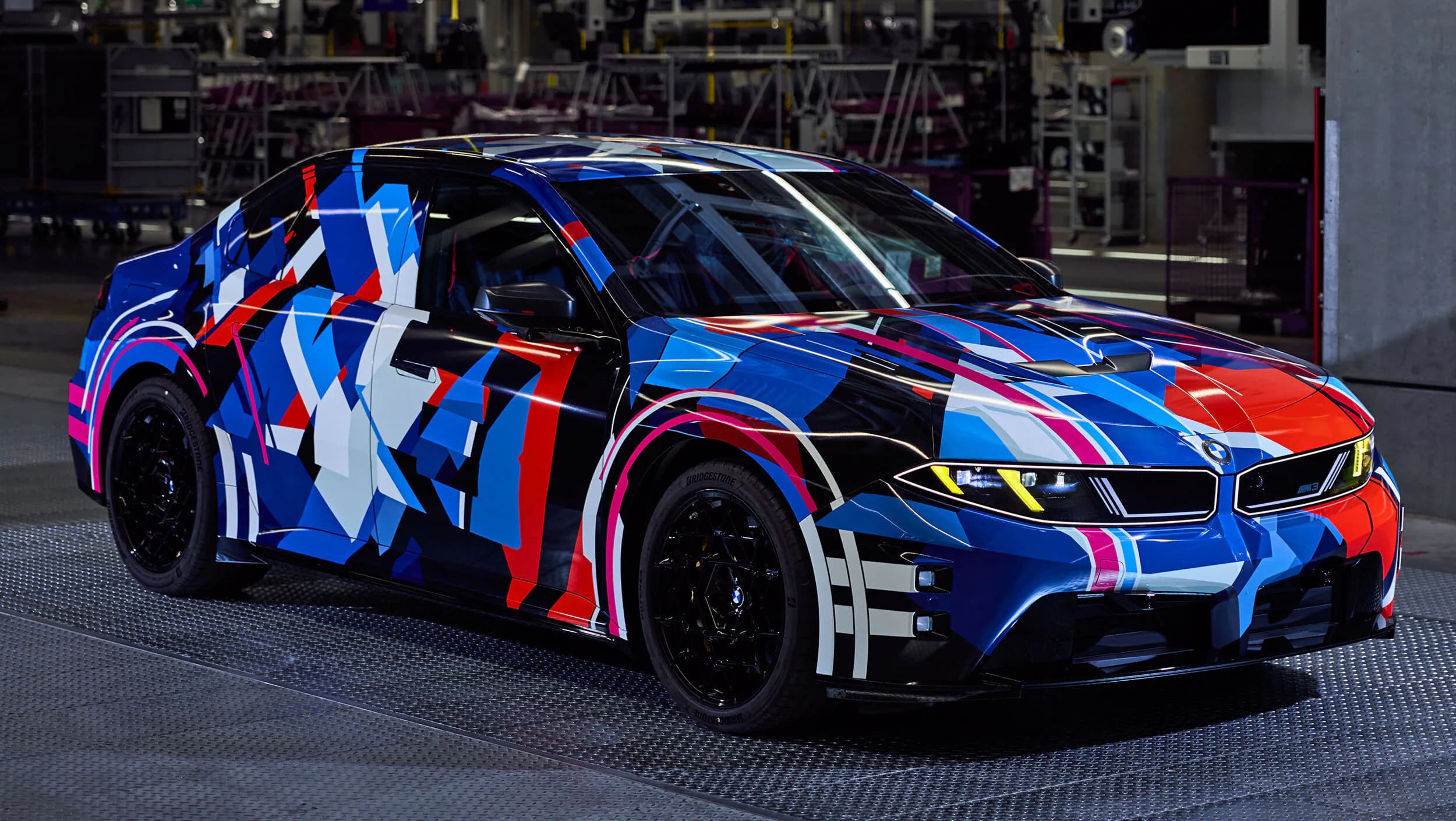
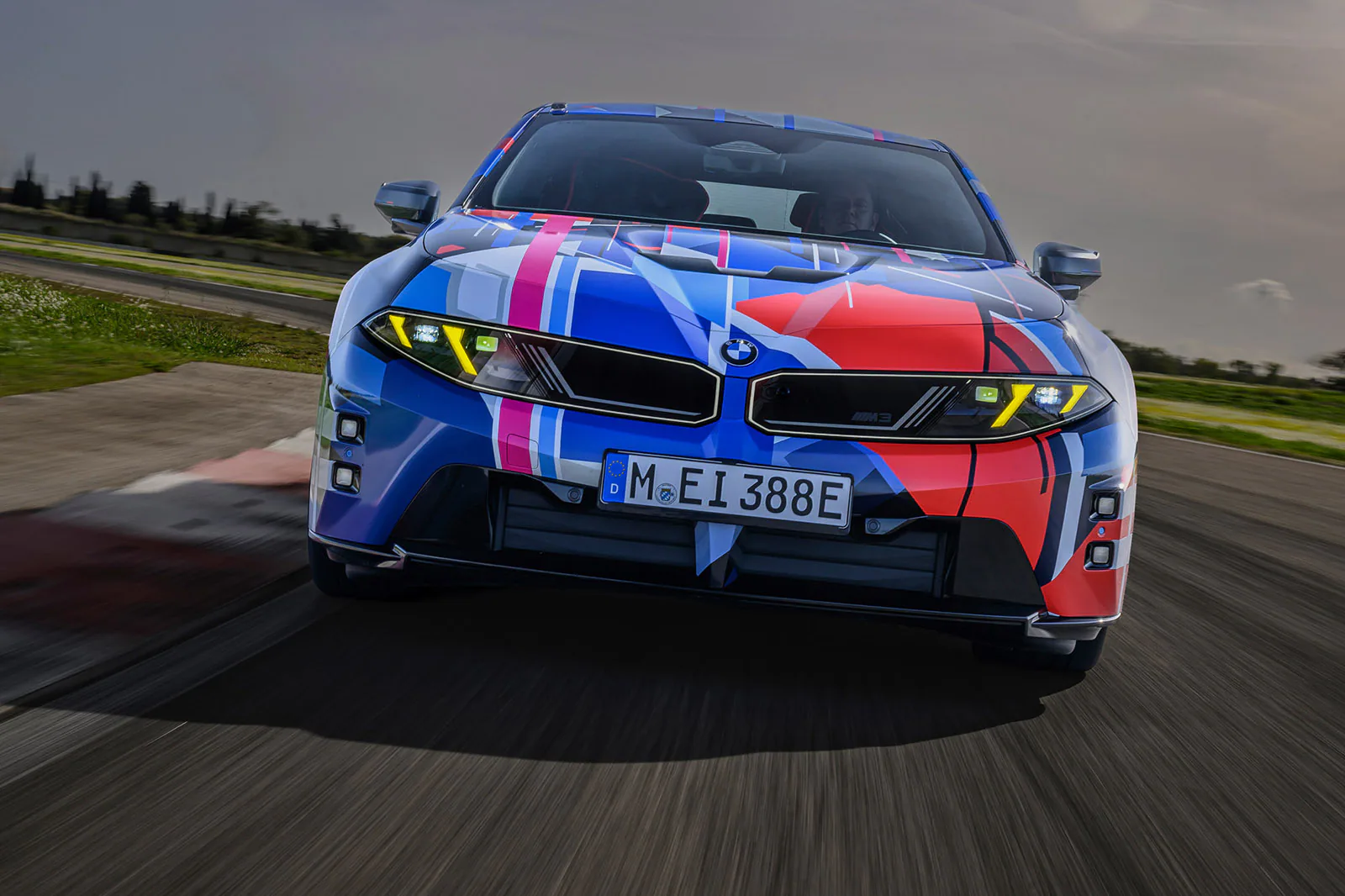
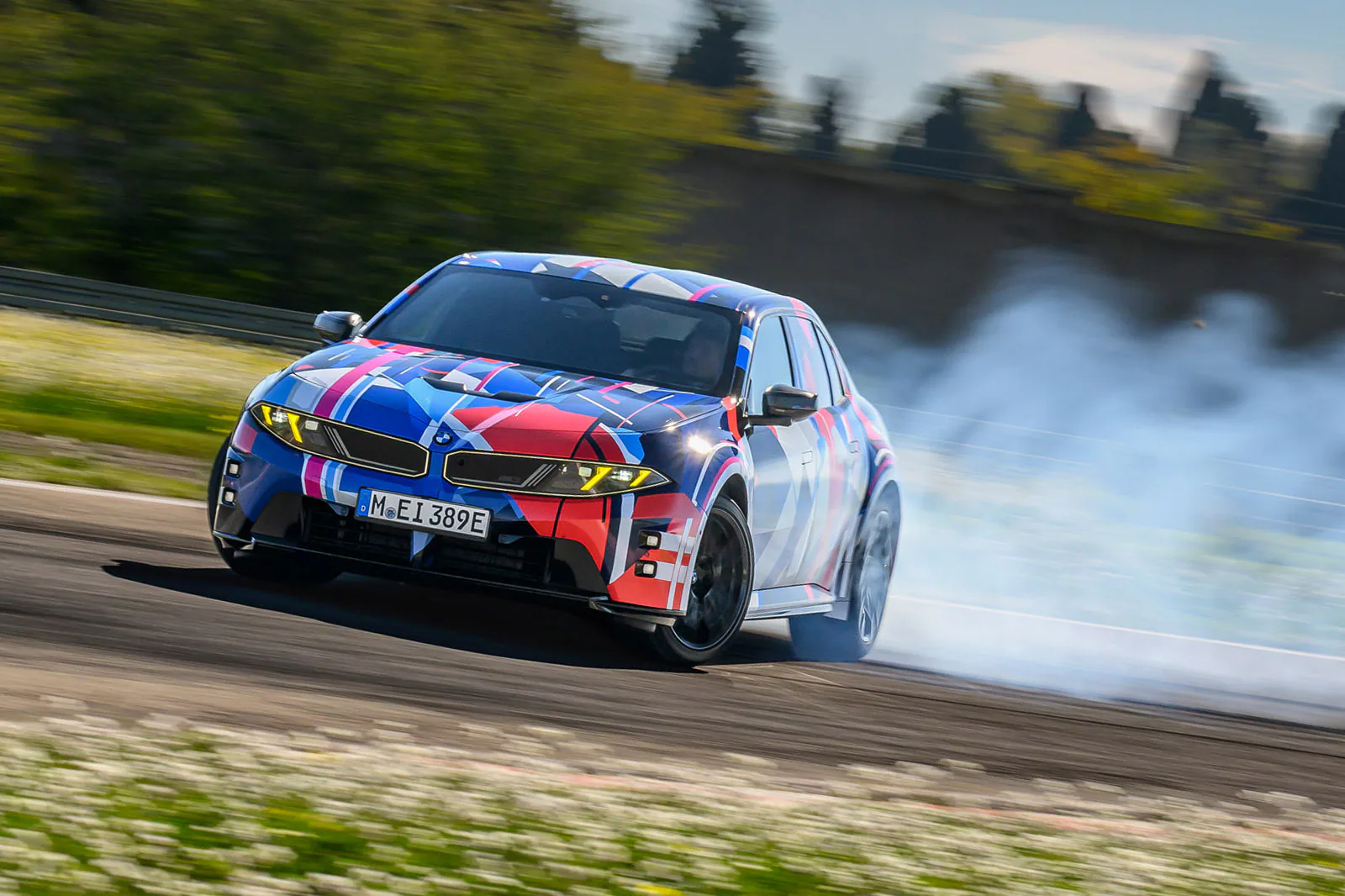
BMW’s next M3 is preparing for a fundamental change: electric power, four motors and no shortage of computing power deciding what each wheel should be doing. The 2027 BMW M3 prototype has now been driven at the company’s Miramas proving ground in France, revealing an EV designed to retain rear-driven M-car behaviour while adding individual control of all four wheels.
The headline figure is approximately 838bhp (625kW), with a quoted peak torque figure of around 885lb ft (1,200Nm). There is one electrically excited synchronous motor per wheel, rather than the more familiar arrangement of one motor per axle. BMW says the front pair can produce up to roughly 644bhp (480kW), while the rear pair can deliver around 751bhp (560kW), although the system cannot supply every motor’s maximum output simultaneously.
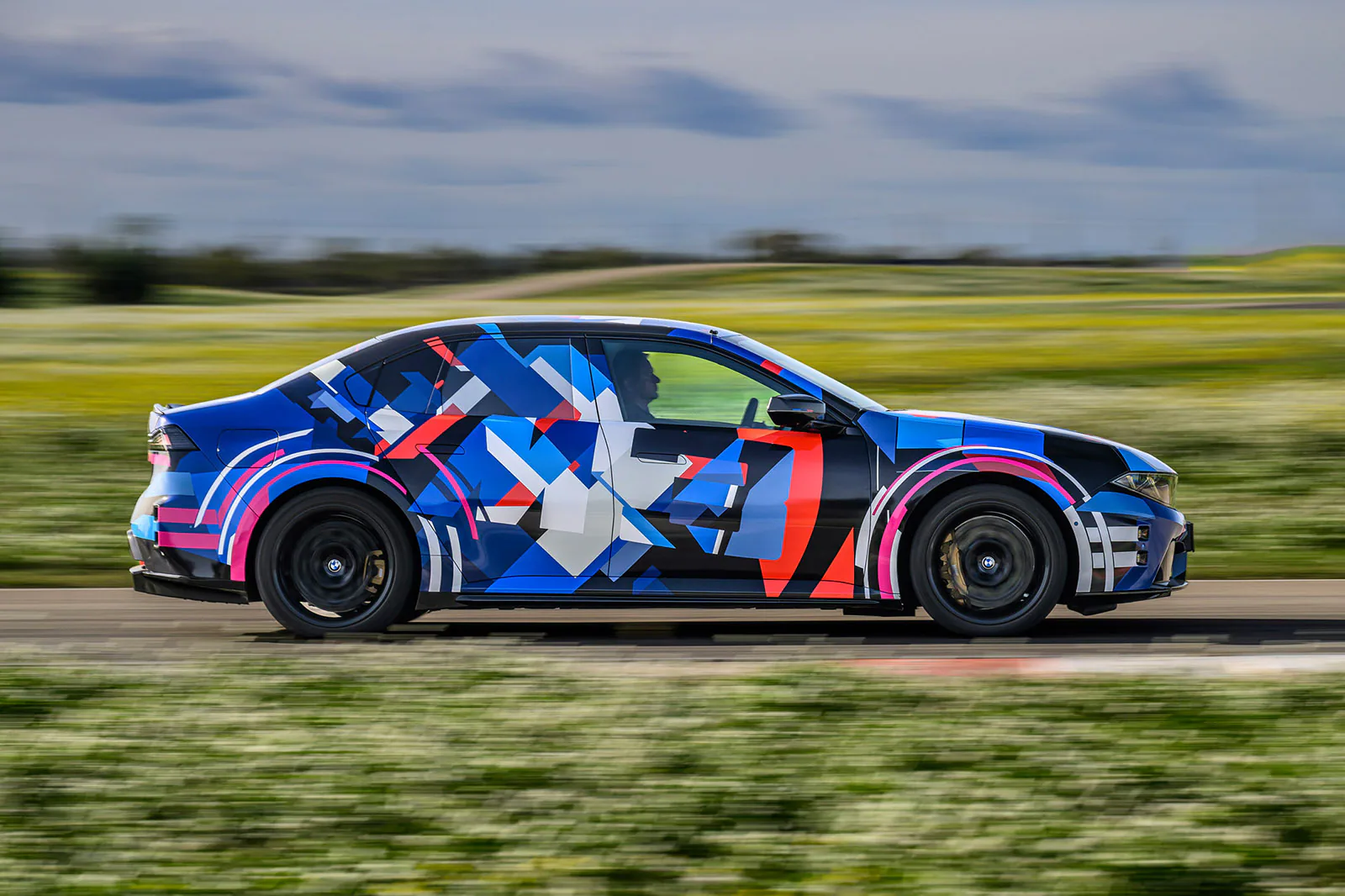
That apparent surplus is deliberate. With no mechanical link between the wheels, the M3 can vary drive and regenerative braking force at each corner individually. BMW’s control system uses steering, accelerator and brake inputs to decide where torque or recuperation is needed, replacing much of the work traditionally performed by differentials, clutch packs and hydraulic brake intervention. It is an ambitious solution to the rather old EV problem of having immense power but not always much subtlety.
“We think a BMW can be electrified without compromise. It is not a question about the powertrain. It’s a question of whether it is an M car,” said Stefan Lupberger, who oversees vehicle dynamics and functional development of the car.
Rear-driven by default
Despite the quad-motor hardware, BMW says the M3 normally operates in rear-wheel drive. The front axle can be brought in during acceleration, when front-wheel recuperation is required or when Sport settings are selected. A rear-drive-only mode is also planned, for those occasions when the driver would prefer the electronics to take a slightly longer coffee break.
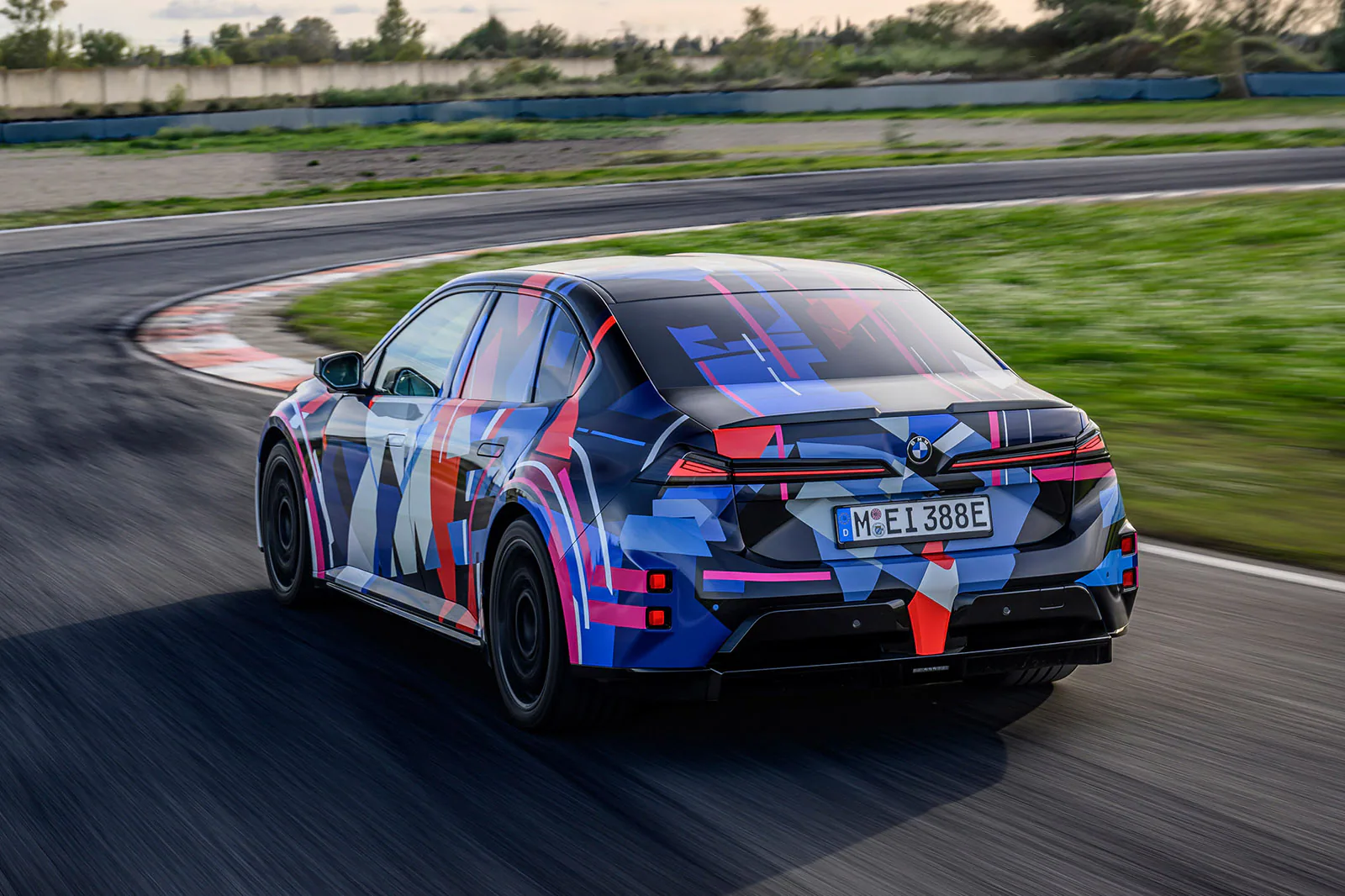
Test drivers found the prototype could initially understeer in its calmer settings, but became more adjustable as the sportier modes and reduced stability-control intervention were selected. In its most aggressive configuration, the car was reported to offer progressive and controllable oversteer, while still using its electronics to meter torque at each wheel.
Regenerative braking is a major part of that strategy. BMW quotes up to 540kW of energy recuperation, which it says can operate close to the tyres’ dynamic grip limit. The aim is not merely to replenish the battery: applying regenerative braking separately at each wheel is intended to sharpen turn-in and help the car hold a chosen line through a corner.
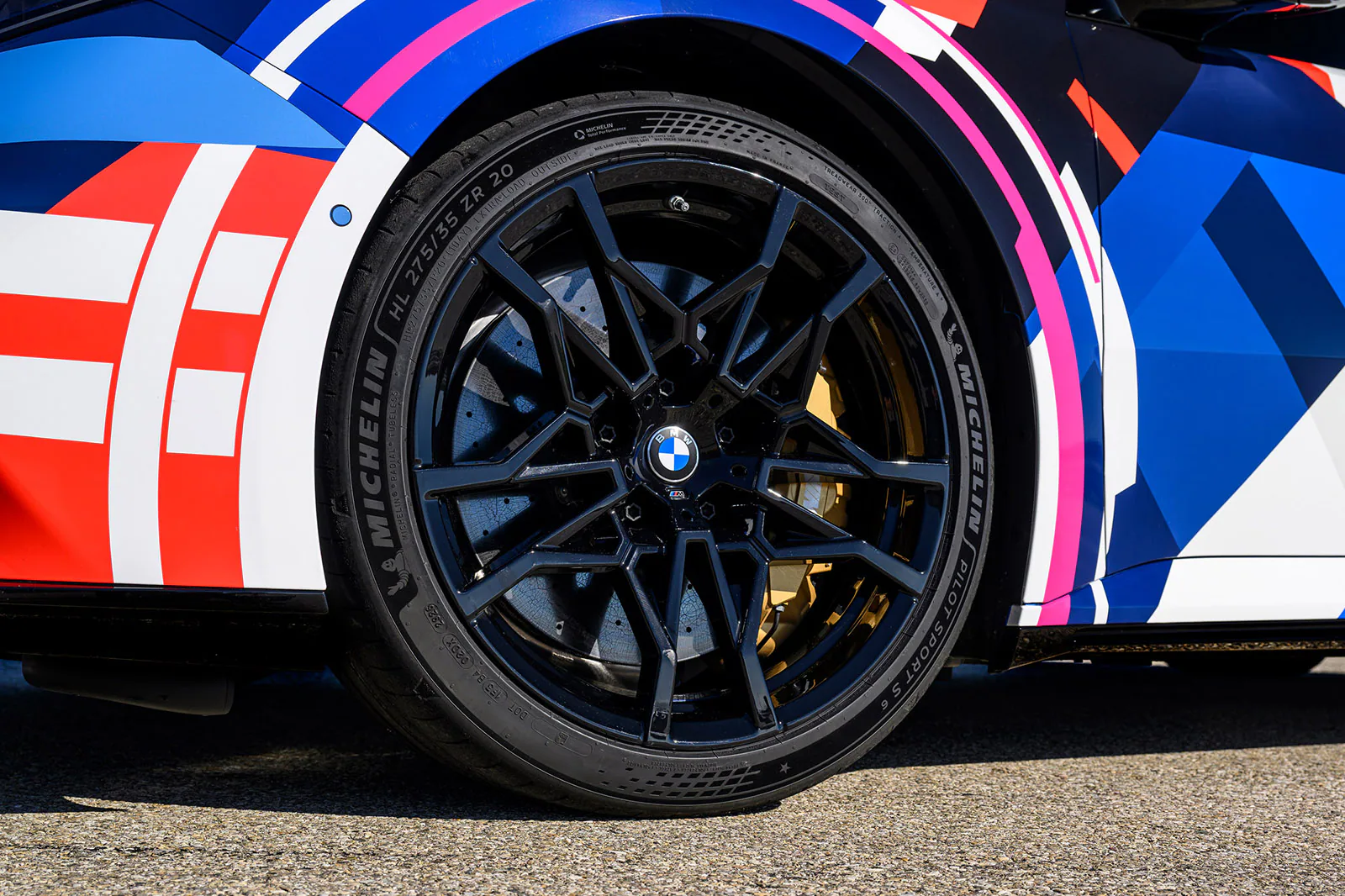
It should also reduce demand on the friction brakes during circuit use. Carbon-ceramic discs will be optional, and a prototype’s front discs were measured at around 100 degrees Celsius after a track stint. BMW claims the high recuperation rate can also improve track endurance, with one engineer saying the car could regain sufficient energy for one additional lap after every three laps at the same pace.
A new battery and a different kind of gearbox
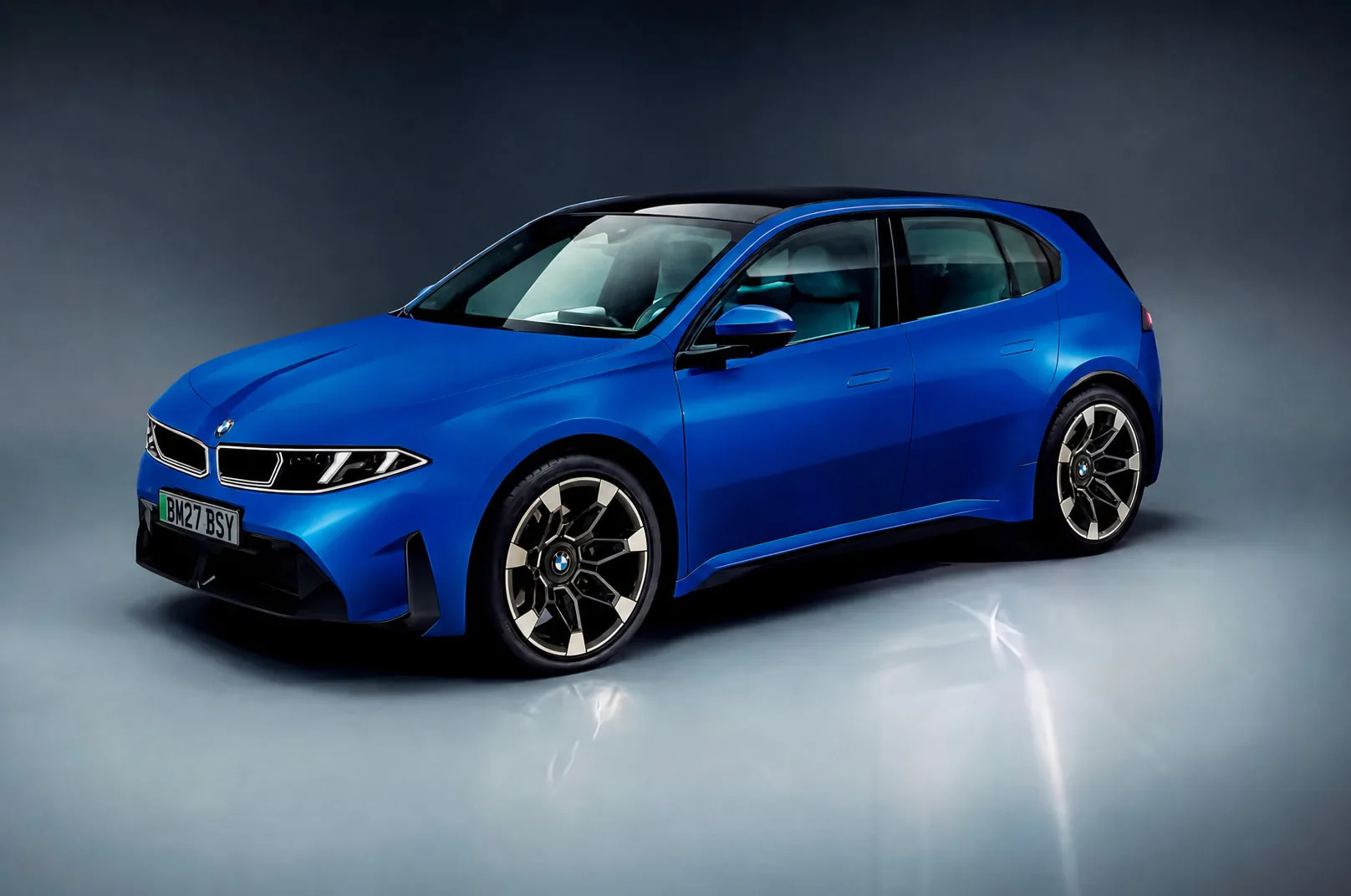
The M3 uses an M-specific battery of about 100kWh in a casing similar in size to that of the regular i3. It has a new cell design and enhanced cooling to deal with the sustained power flows demanded by four motors, rapid charging and heavy regeneration. BMW has indicated an 800V electrical system.
The final range and charging figures remain provisional. BMW’s current EPA range estimate is around 300 miles and its stated peak DC charging rate is around 420kW. Other provisional figures have listed a 400-mile range and a 450kW maximum charging rate, underlining that the production specification has not yet been finalised.
BMW is also joining the growing number of manufacturers giving an EV synthetic shifts and soundtrack. Its system has six selectable ‘stages’, rather than gears, with an automatic programme, a paddle-operated setting and an artificial limiter if the driver does not request an upshift. The stages alter the sound and driving response rather than interrupting power as a conventional transmission would. A conventional single-speed EV mode is available, too.
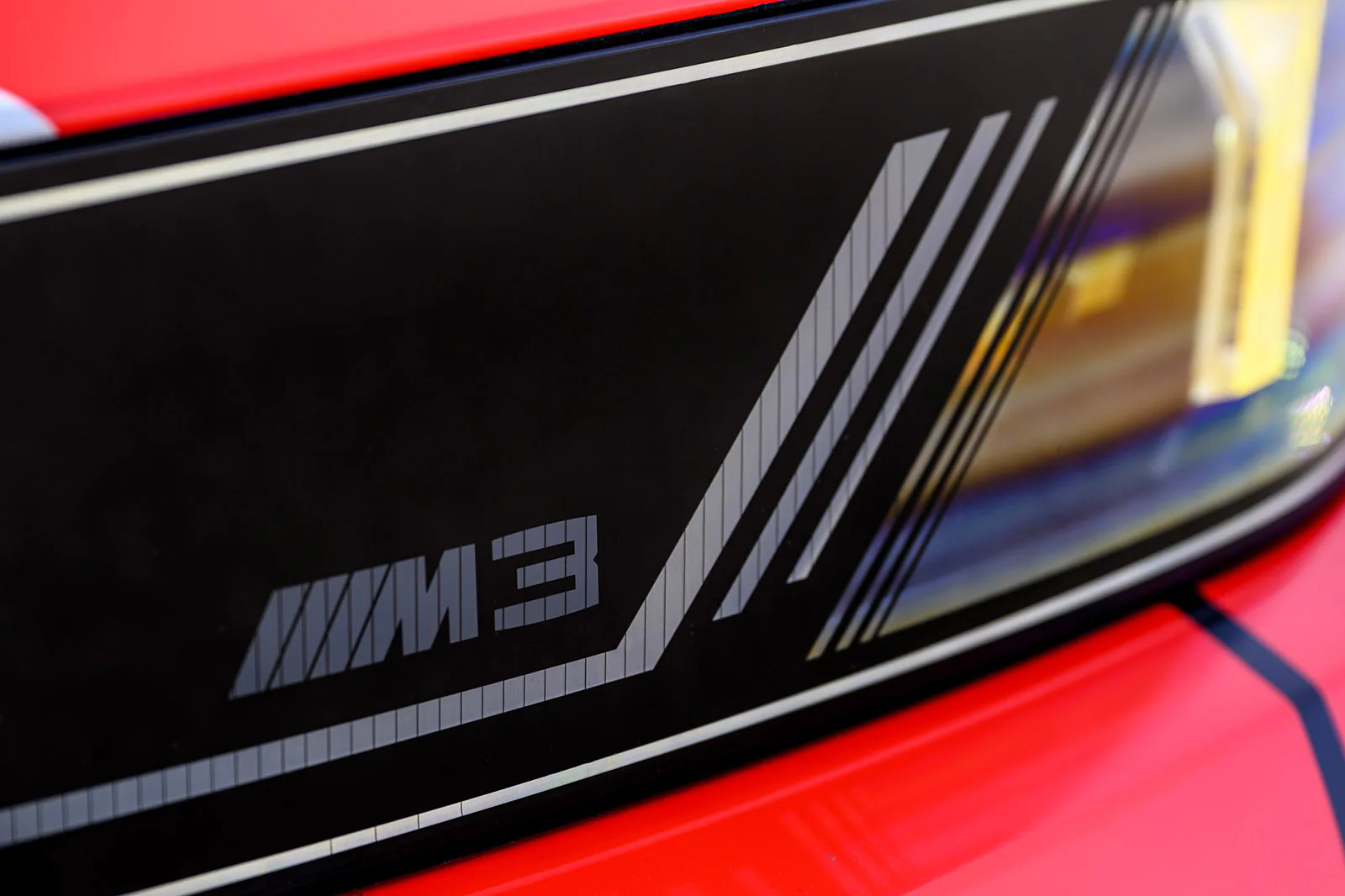
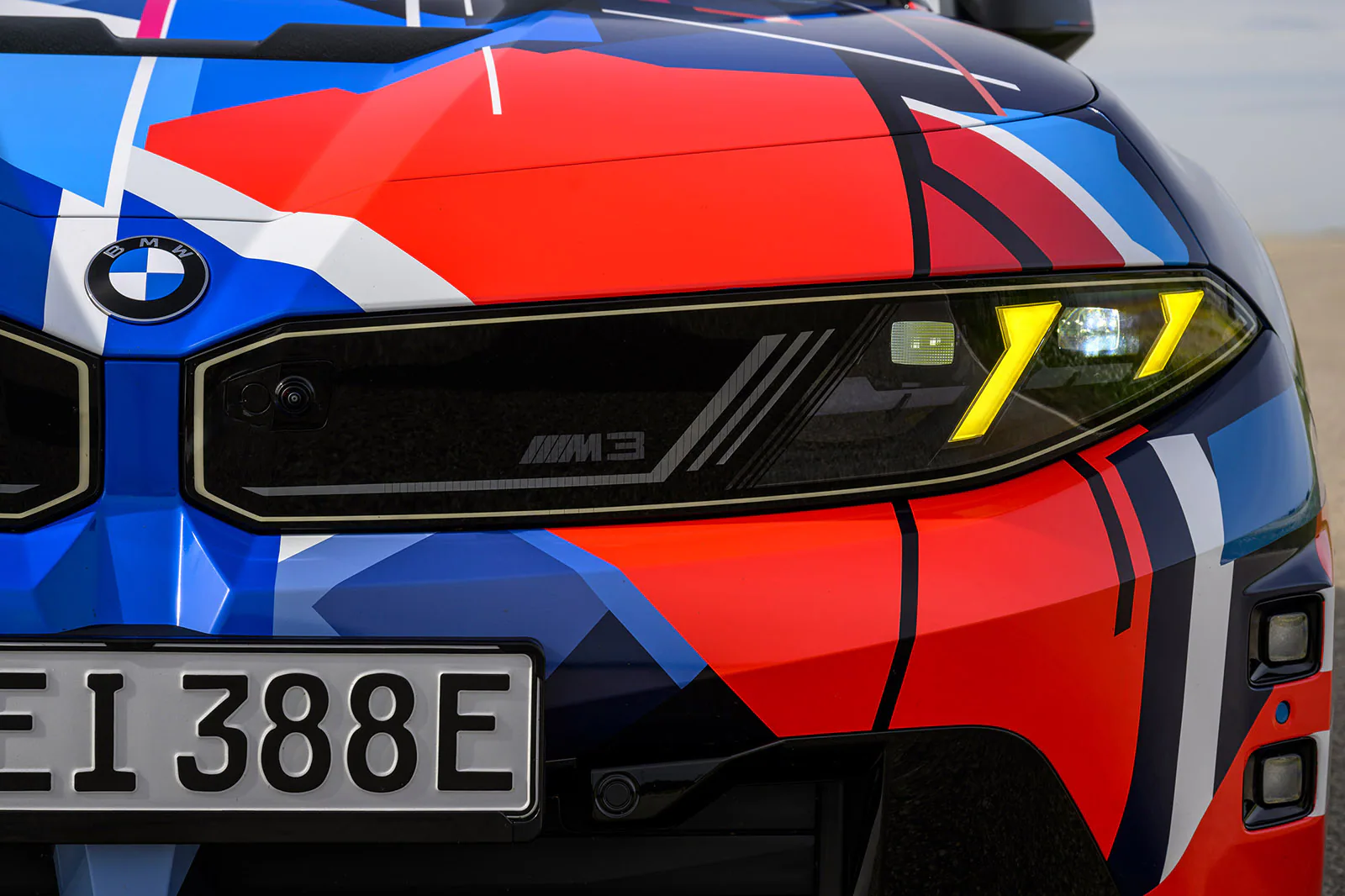
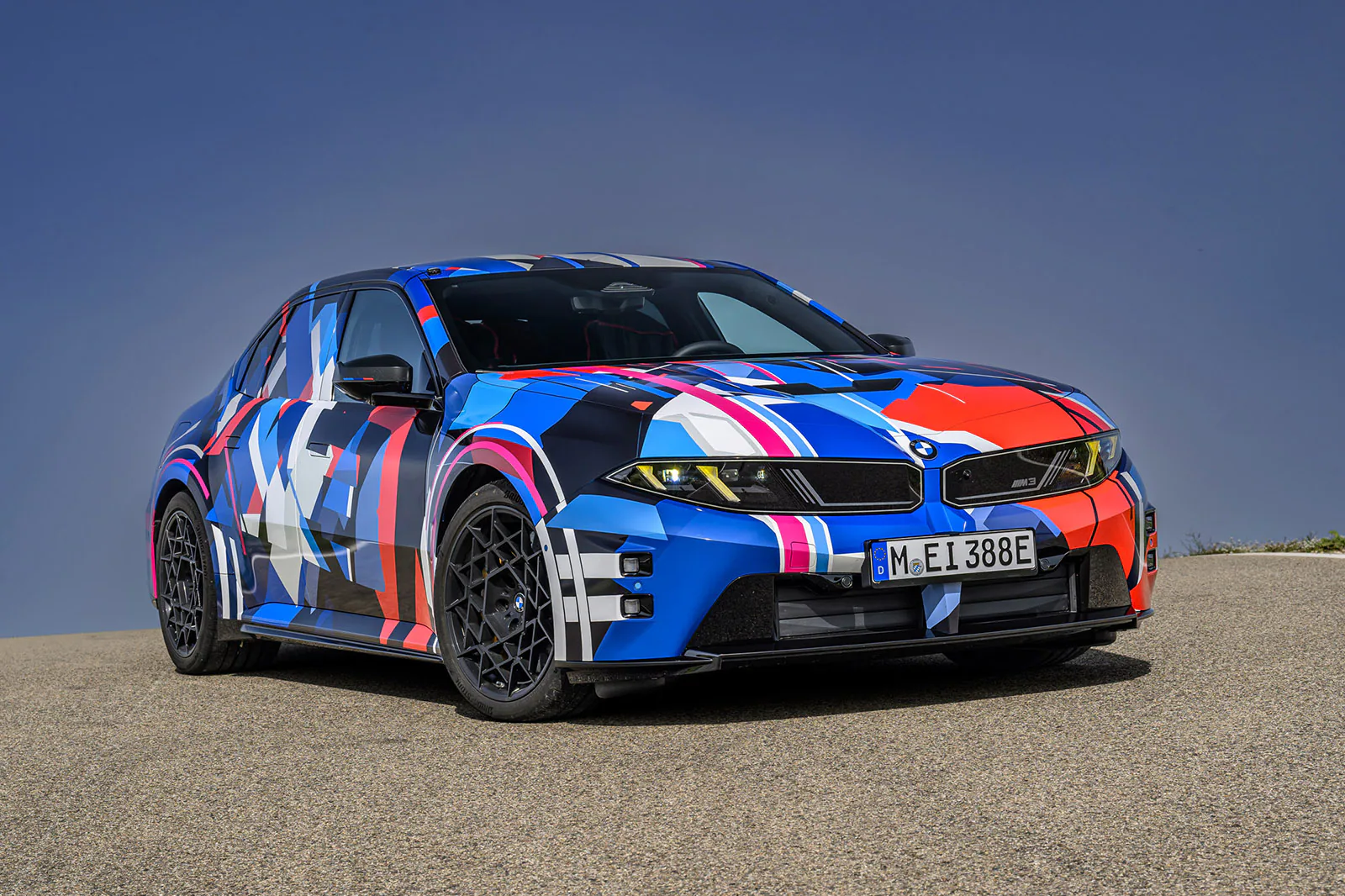
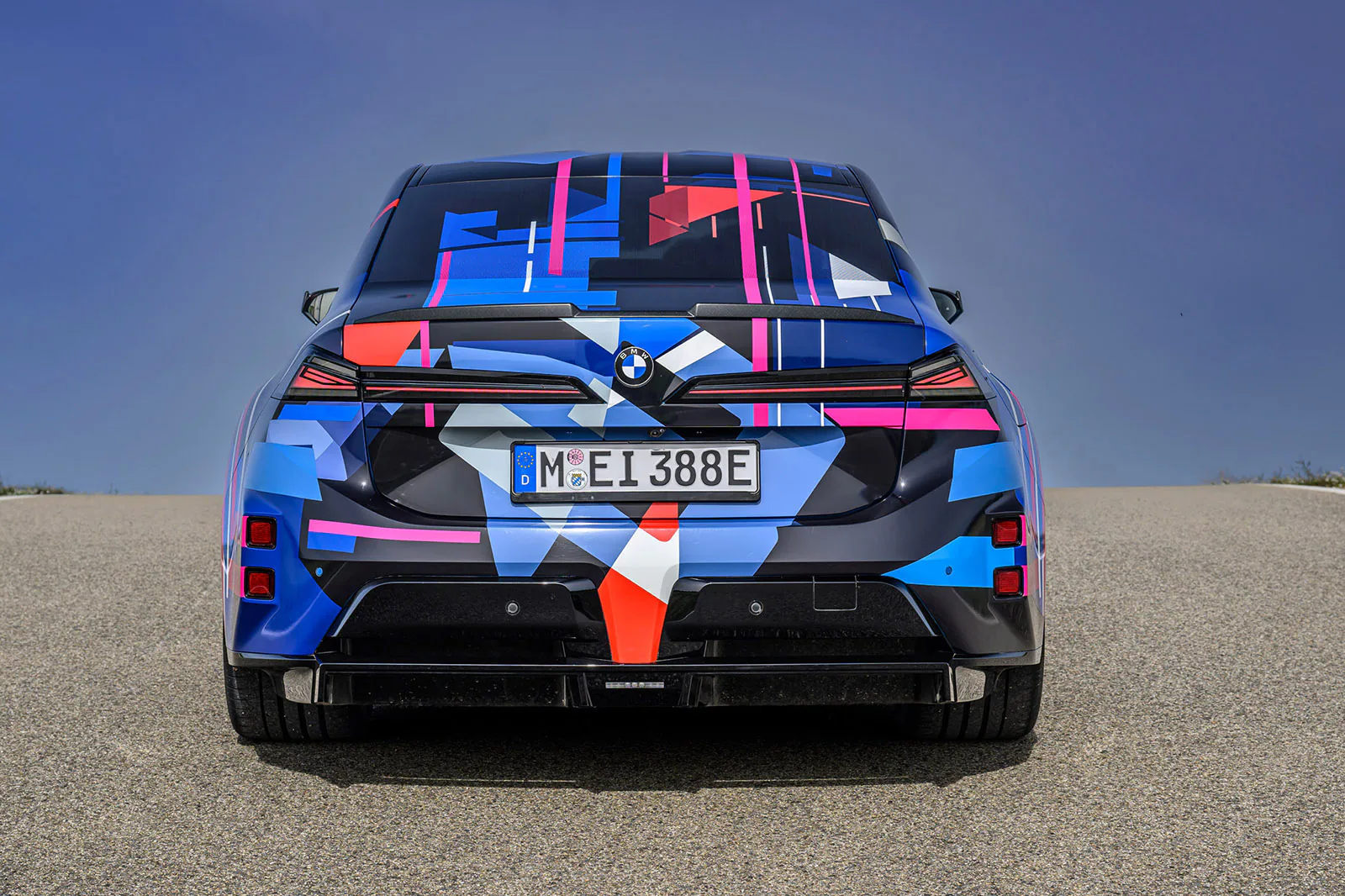
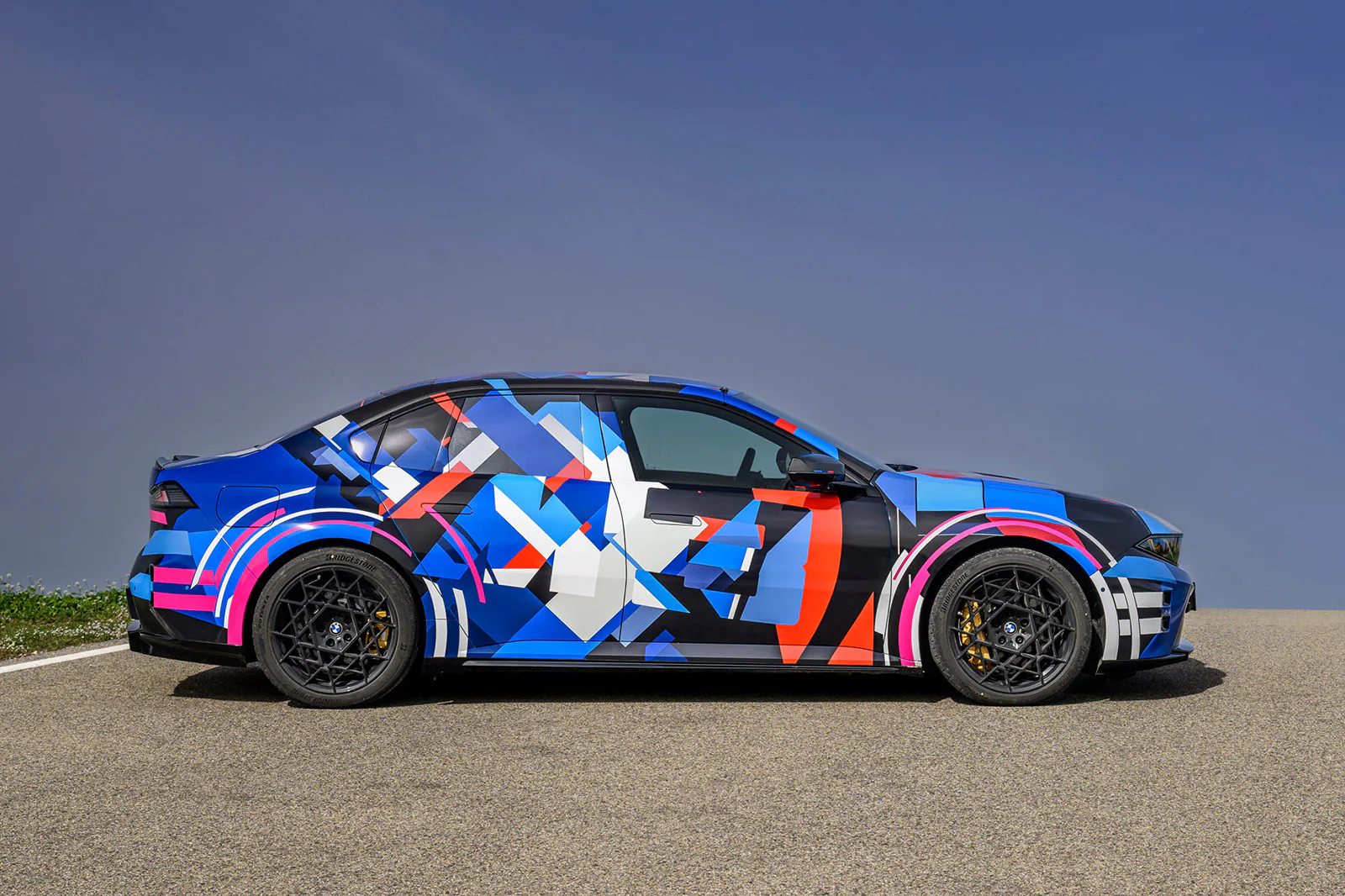
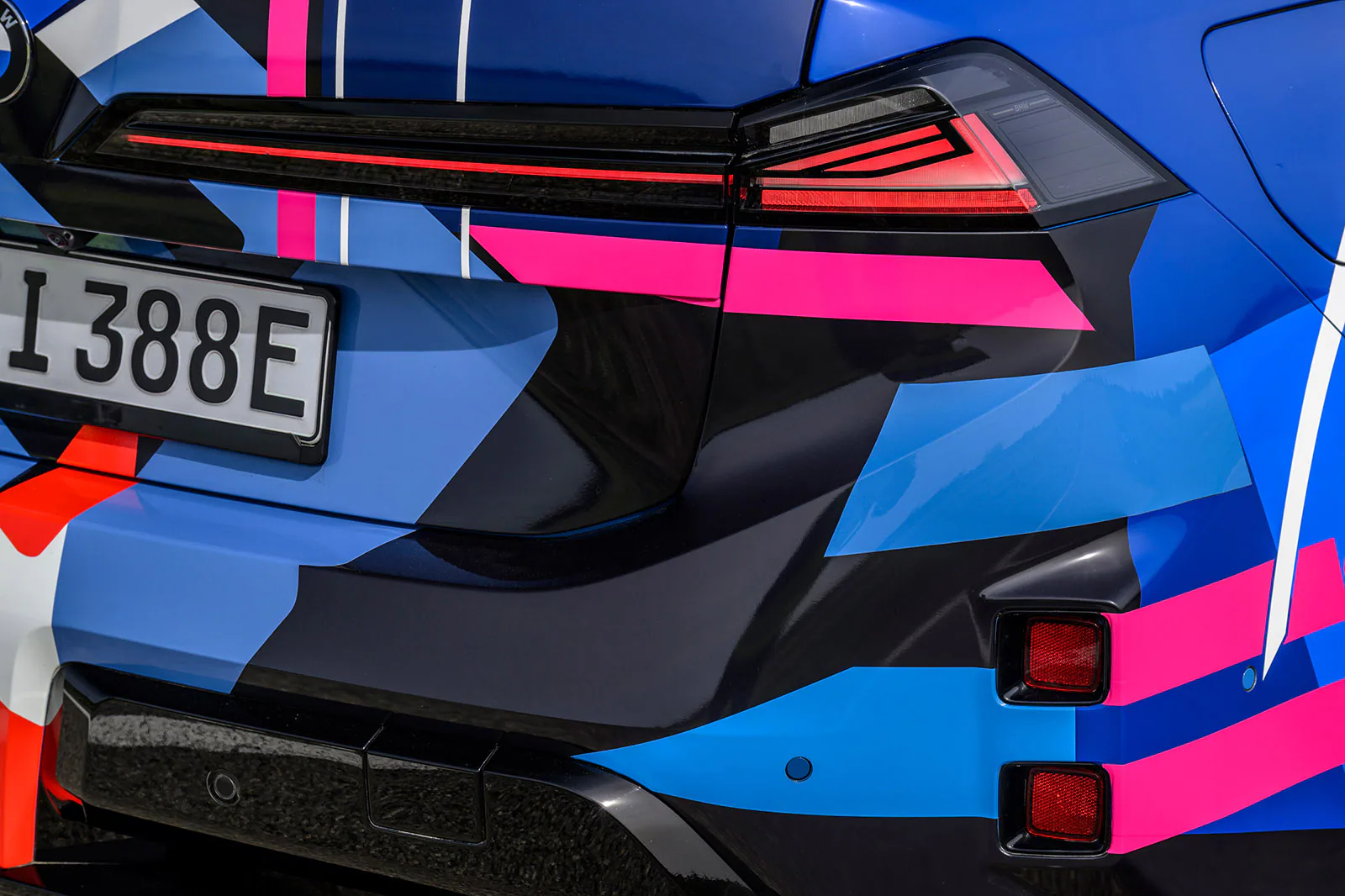
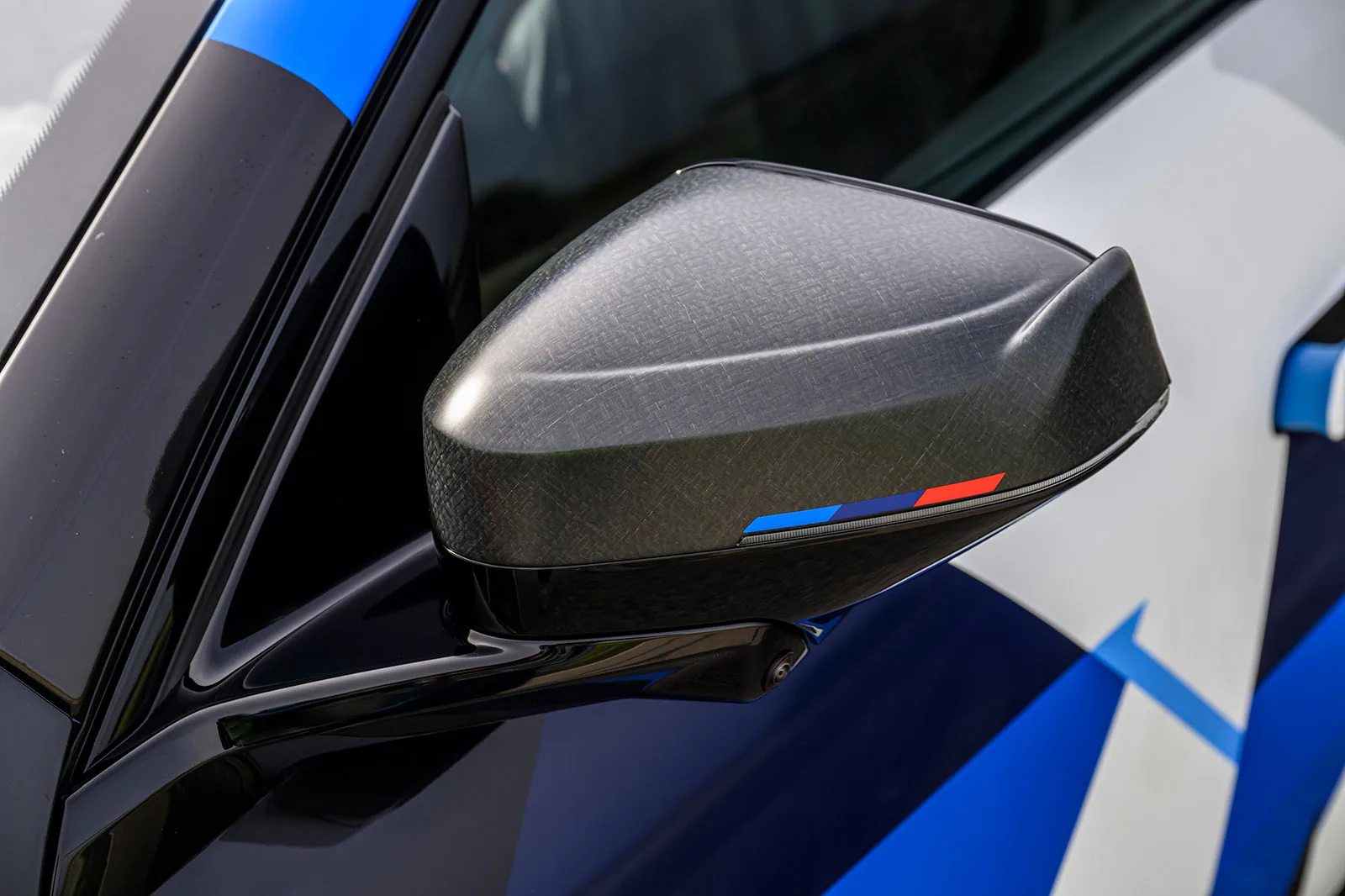
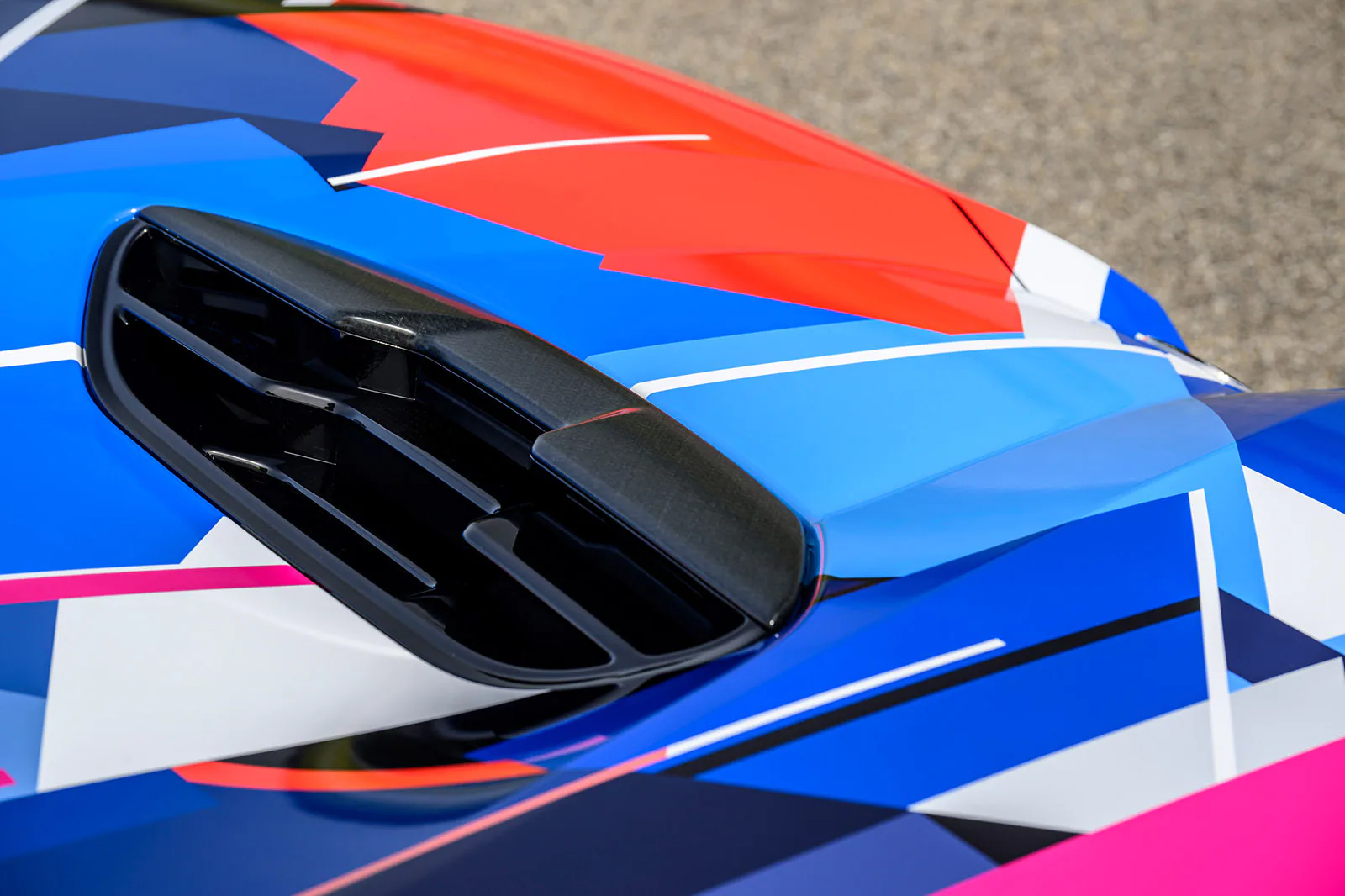
Underneath the camouflage, the M3 has wider bodywork than the i3 sedan, with enlarged wheel arches and aerodynamic additions. It rides on Michelin Pilot Sport tyres, while the chassis receives new rigidly mounted rear subframes, strengthened axle carriers, additional bracing and battery-to-body reinforcement plates. The suspension is largely new, using MacPherson struts at the front and a five-link arrangement at the rear, with adaptive dampers.
BMW has not confirmed the M3’s kerb weight, an omission that will matter given the additional motors and heavy-duty cooling hardware. The prototype has been described as close to production specification, although final calibration work remains. Its official name will simply be BMW M3, without an EV suffix, and BMW is expected to disclose final pricing and full specifications closer to its summer 2027 arrival.
BMW has not officially confirmed whether the electric M3 will be sold alongside a combustion-engined successor. For now, the company’s message is clear enough: this is not intended to be an electric alternative wearing an M badge. It is intended to be the M3, with four motors doing a job that used to require an engine, transmission, differentials and a great deal more mechanical negotiation.
Sources: Autocar, Road & Track and Car and Driver