Ferrari 296 Challenge Stradale drops hybrid power and gains Fiorano pace
Ferrari’s new 296 Challenge Stradale removes the GTB’s hybrid system, cuts dry weight to 1,330 kg and laps Fiorano quicker than the more powerful 296 Speciale.
By Rudi Louw ·
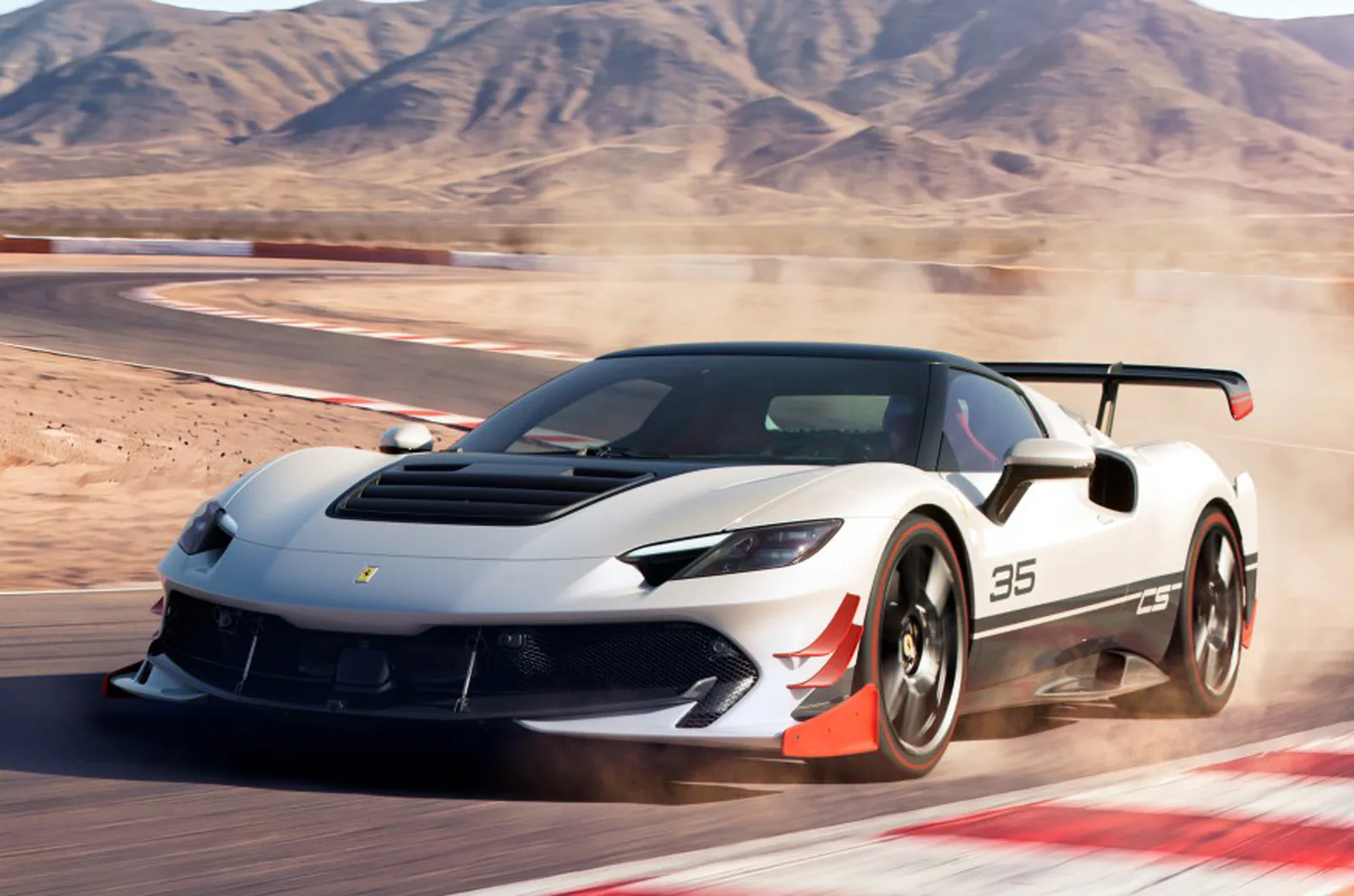
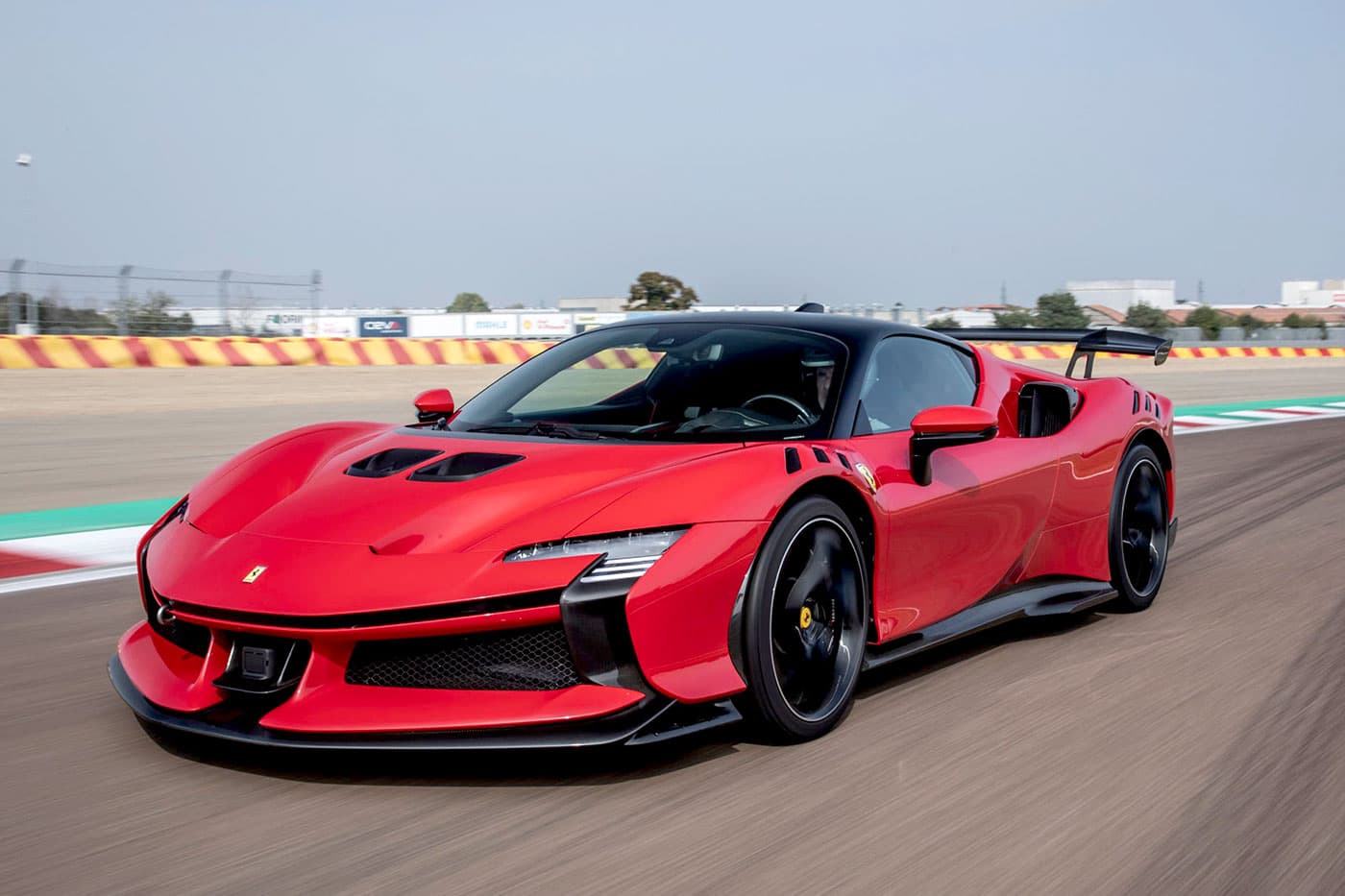
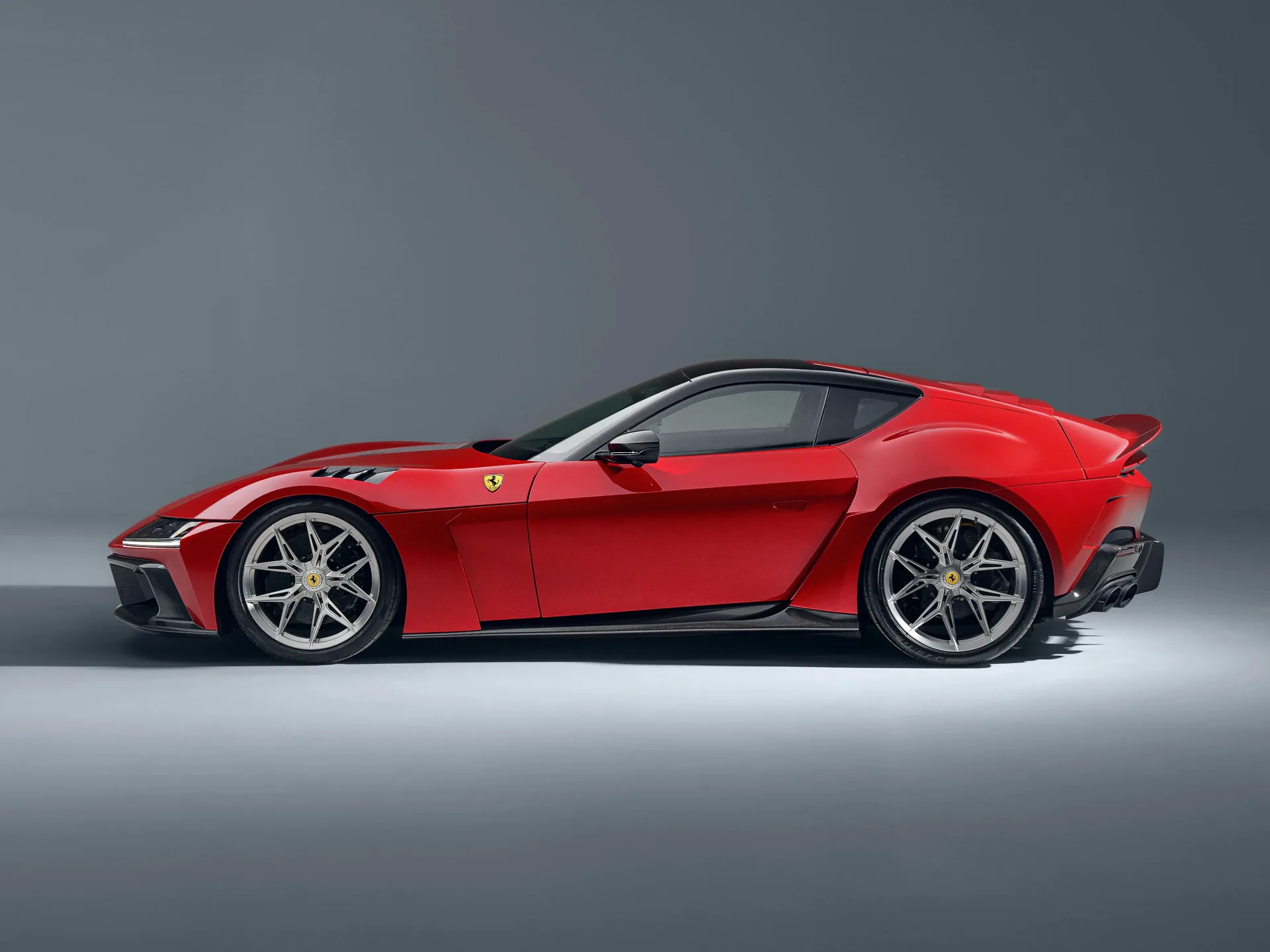
Ferrari has brought back the Challenge Stradale name for the 296 Challenge Stradale, a road-legal, race-car-derived version of its V6 supercar that abandons hybrid assistance in pursuit of less mass, more downforce and sharper track performance.
The 296 CS was developed alongside the new 296 Challenge Evo customer racing car and is intended to sit alongside, rather than replace, the hybrid 296 Speciale. It follows a familiar Ferrari recipe, last applied to the 360 Challenge Stradale: take the competition car’s lessons seriously, then add enough road equipment to make the registration process possible.
Its defining change is the deletion of the 296 GTB’s plug-in-hybrid hardware. The 5-kWh battery and rear-mounted electric motor are gone, leaving the mid-mounted 3.0-litre twin-turbo V6 to work alone. Ferrari quotes 493 kW, or 670 PS/661 bhp, and 740 Nm of torque, sent to the rear wheels through an eight-speed dual-clutch gearbox.
That is substantially less peak power than the 296 GTB’s 819 hp combined output and the 296 Speciale’s 868 hp. But removing the electrified hardware helps bring dry weight down to 1,330 kg, 140 kg below the GTB and 80 kg lighter than the Speciale. Ferrari also developed lighter transmission components and a new driveline, while the absence of regenerative braking required larger rear carbon-ceramic discs and revised cooling ducts.
Less power, quicker lap
Ferrari claims the result reaches 0-100 km/h in 2.8 seconds, 0-200 km/h in 7.9 seconds and exceeds 300 km/h. More tellingly for a car wearing a large fixed rear wing, the company says it laps Fiorano in 1min 18.5sec: 2.5sec quicker than the 296 GTB and 0.5sec ahead of the 296 Speciale.
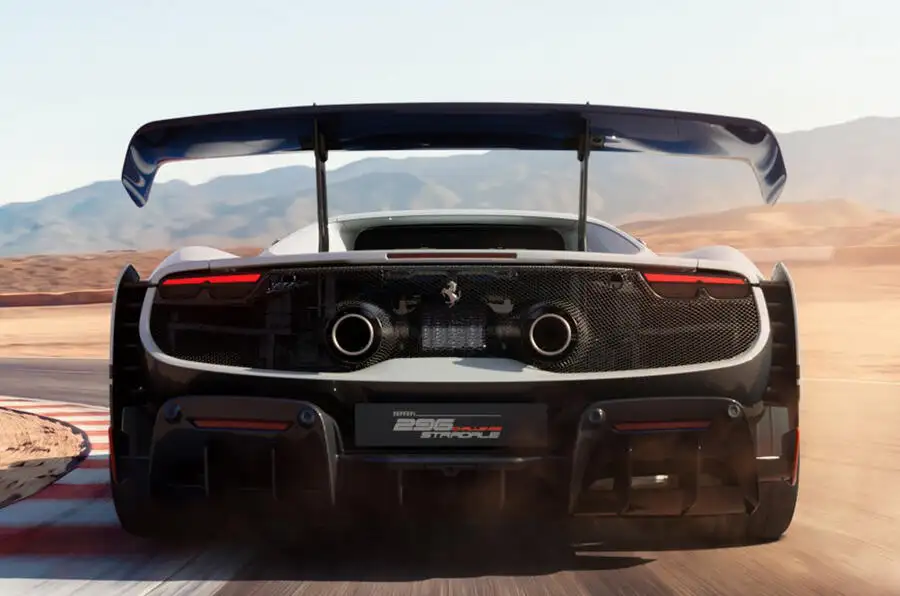
The Challenge Stradale is not claimed to be quicker everywhere. Ferrari says the Speciale retains an advantage at a high-speed circuit such as Monza, where the hybrid model’s additional power has more opportunity to matter. The CS should instead favour more technical circuits, where its reduced mass, aerodynamic load and chassis focus can get to work.
Without an electric motor to conceal any pause before the turbochargers wake up, Ferrari has revised boost pressure, valve timing and insulation to improve low-end response. The V6 revs to 8,500rpm and feeds a Challenge Stradale-specific twin-exit exhaust. The gearbox uses a more aggressive track calibration at high loads, with Ferrari quoting shifts in “the region of” 170 milliseconds, while a separate lower-speed calibration is intended to smooth its manners away from the circuit.
Aero from the Challenge Evo
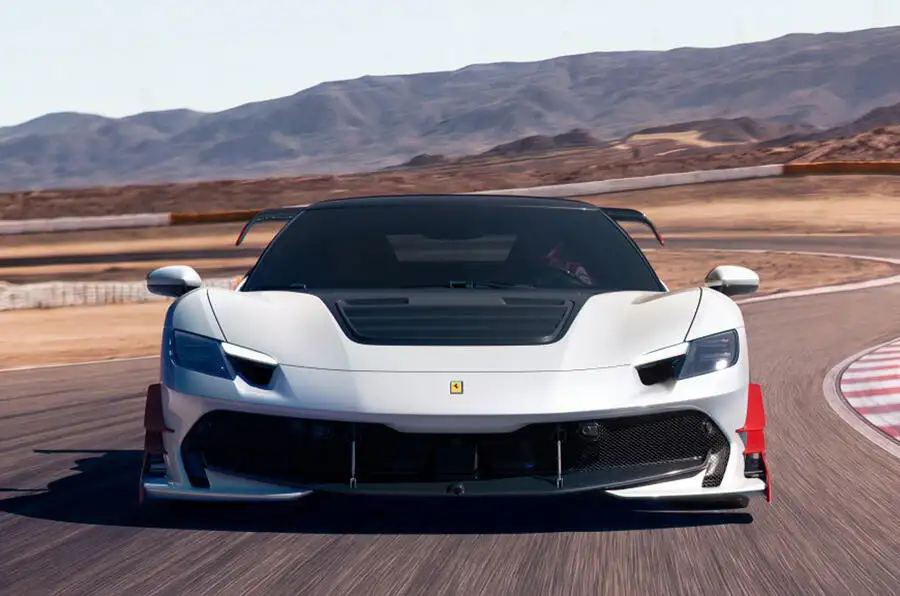
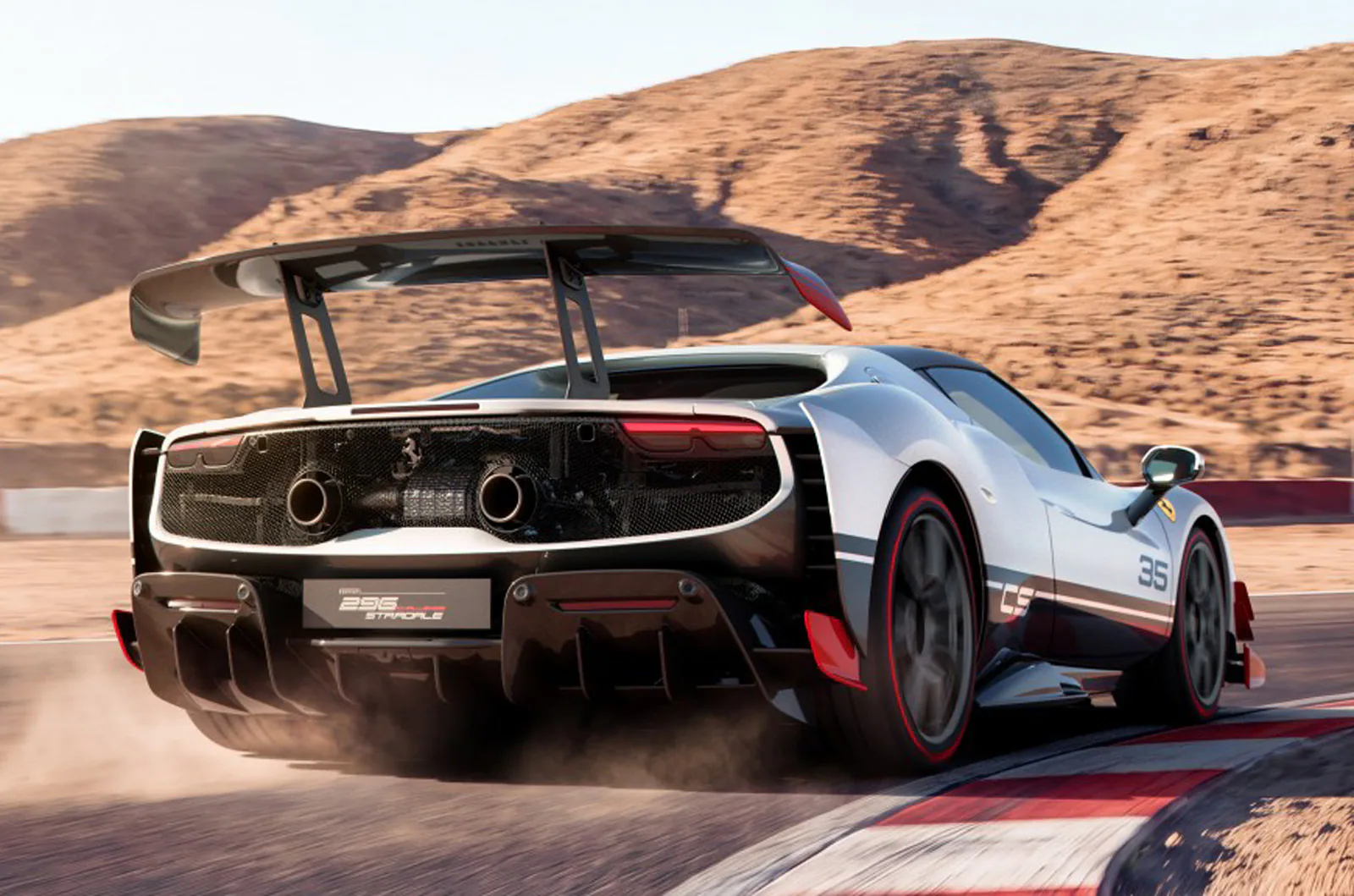
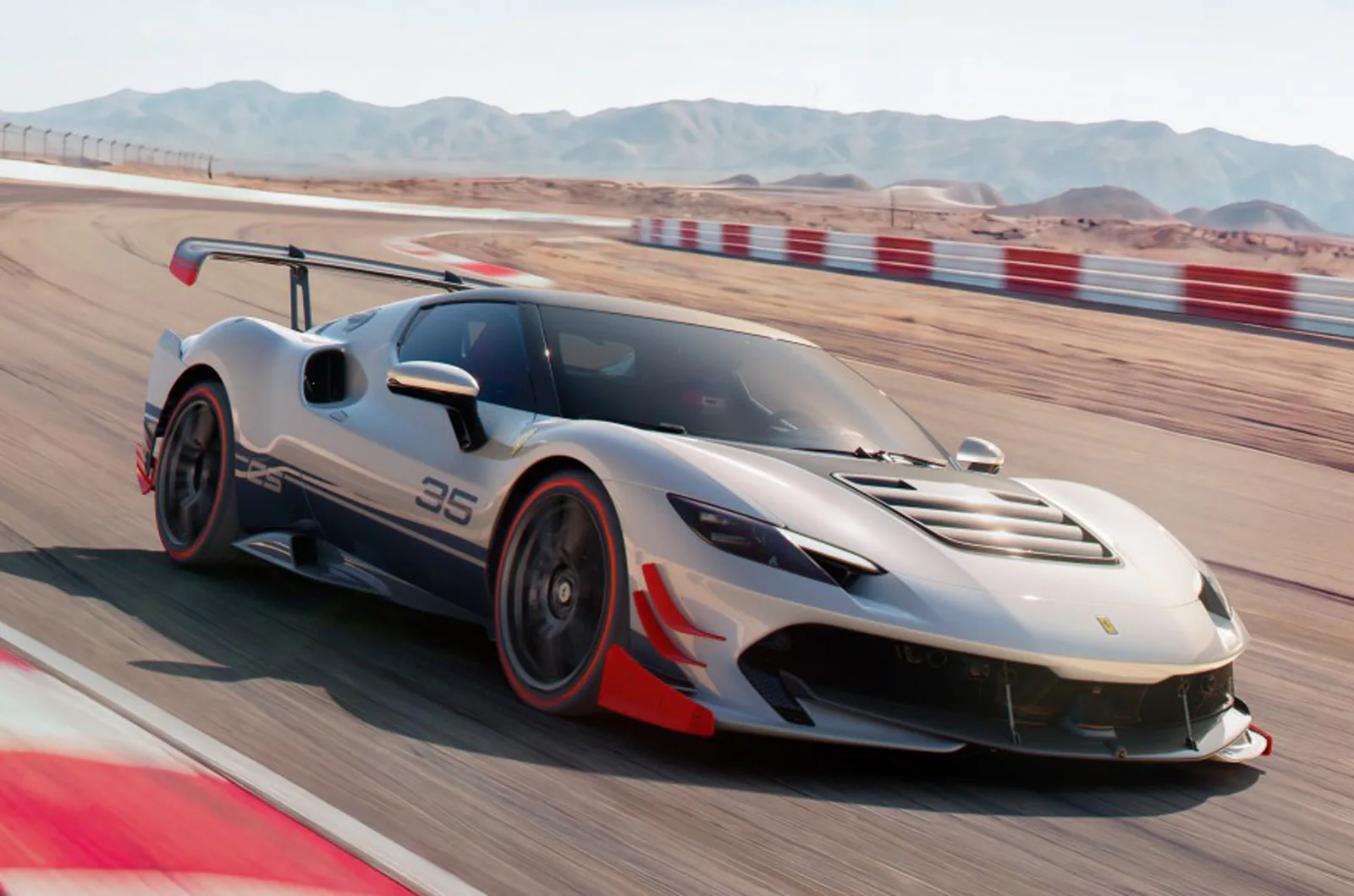
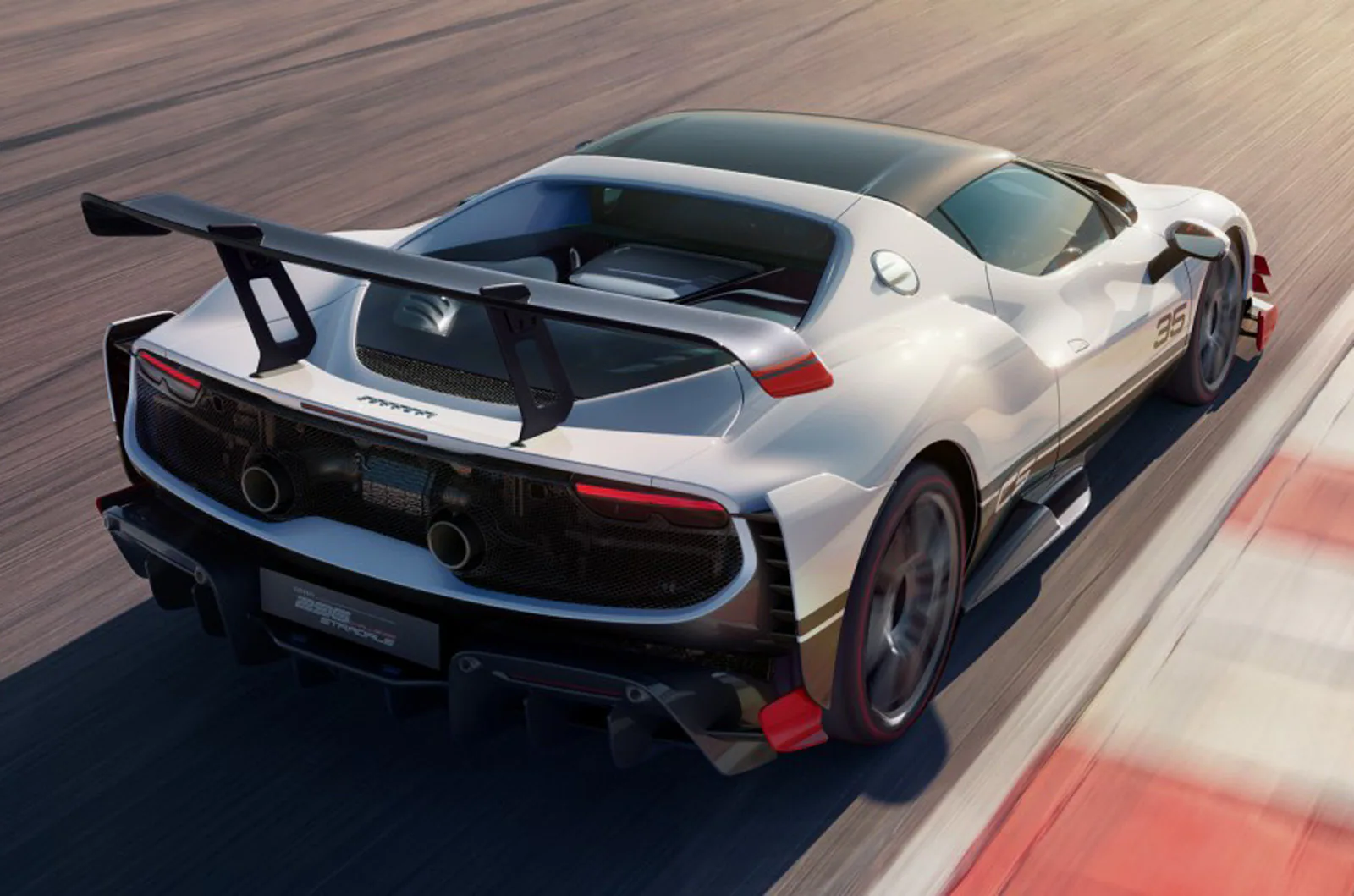
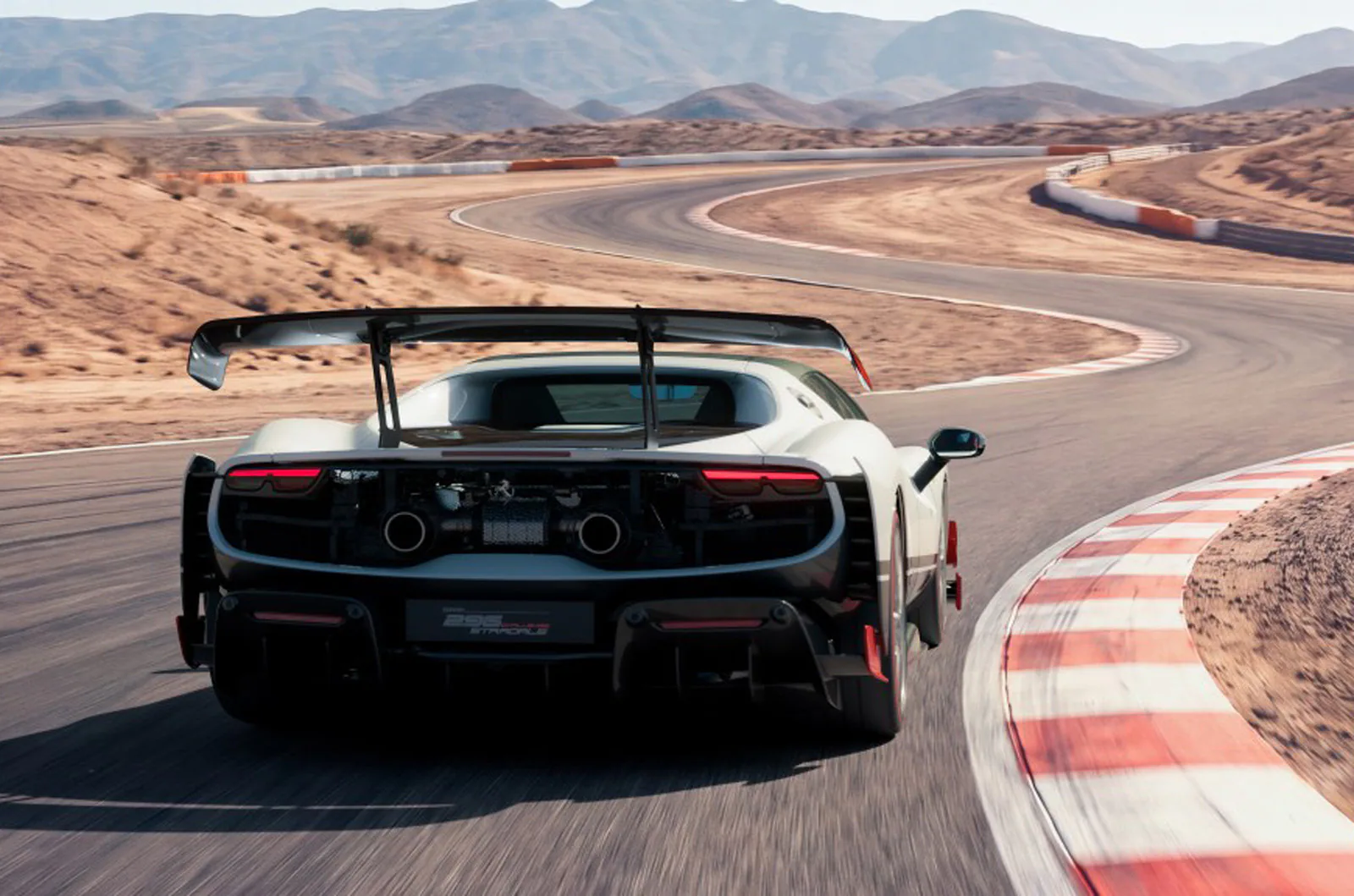
The visual changes are not subtle, nor are they intended to be. A carbon-fibre rear wing, front dive planes, an adjustable front splitter, bonnet vents, a fully enclosed underbody and five pairs of vortex generators closely follow the 296 Challenge Evo. The road car’s wing mounts from underneath rather than using the racer’s swan-neck arrangement, reflecting road-homologation requirements.
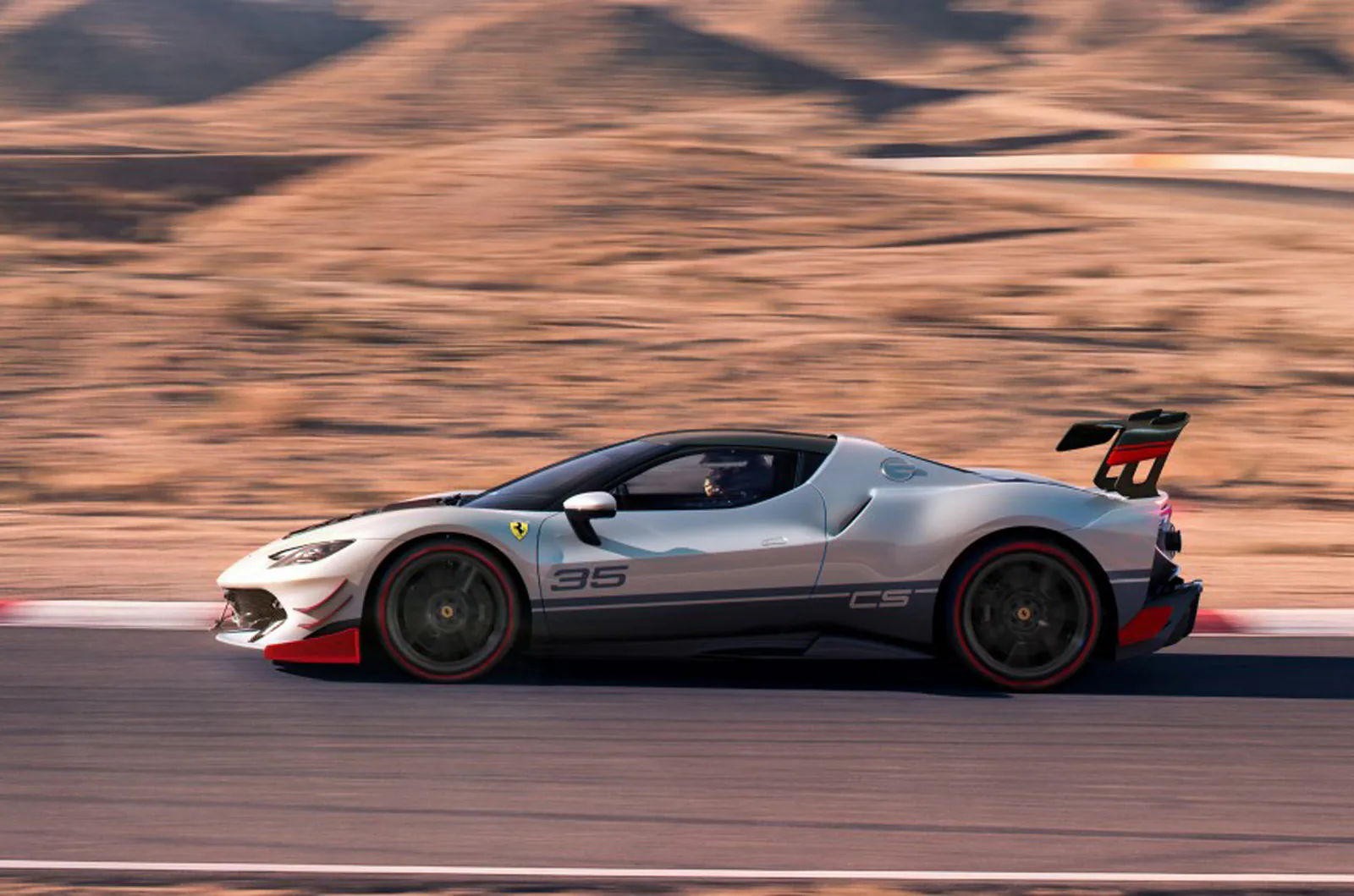
Ferrari says the package generates 617 kg of downforce at 250 km/h, a 72% rise over the 296 GTB. Two bonnet vents channel air from under-bonnet radiators over the windscreen, while aero ducts linking the underbody and upper body are designed to keep aerodynamic performance more consistent when the front of the car compresses under braking.
The chassis also takes its lead from the race car. Semi-active dampers, nearly doubled spring rates and motorsport-derived helper springs aim to control the body without making the car entirely intolerable on public roads. Ferrari claims a 68% reduction in roll gradient, a 7% gain in lateral performance and a 34% improvement in stability compared with the 296 GTB.
Bespoke Pirelli P Zero R tyres are standard, with P Zero Trofeo RS semi-slicks available. The 20-inch forged wheels can be specified in Matte Grigio Corsa, diamond-cut Matte Nero or Matte Bianco Fuji. A new predictive slip-control system, an F80-derived Ferrari Integrated Vehicle Estimator and ABS Evo are also calibrated for the CS’s track-focused mission.
Carbon fibre, but not total deprivation
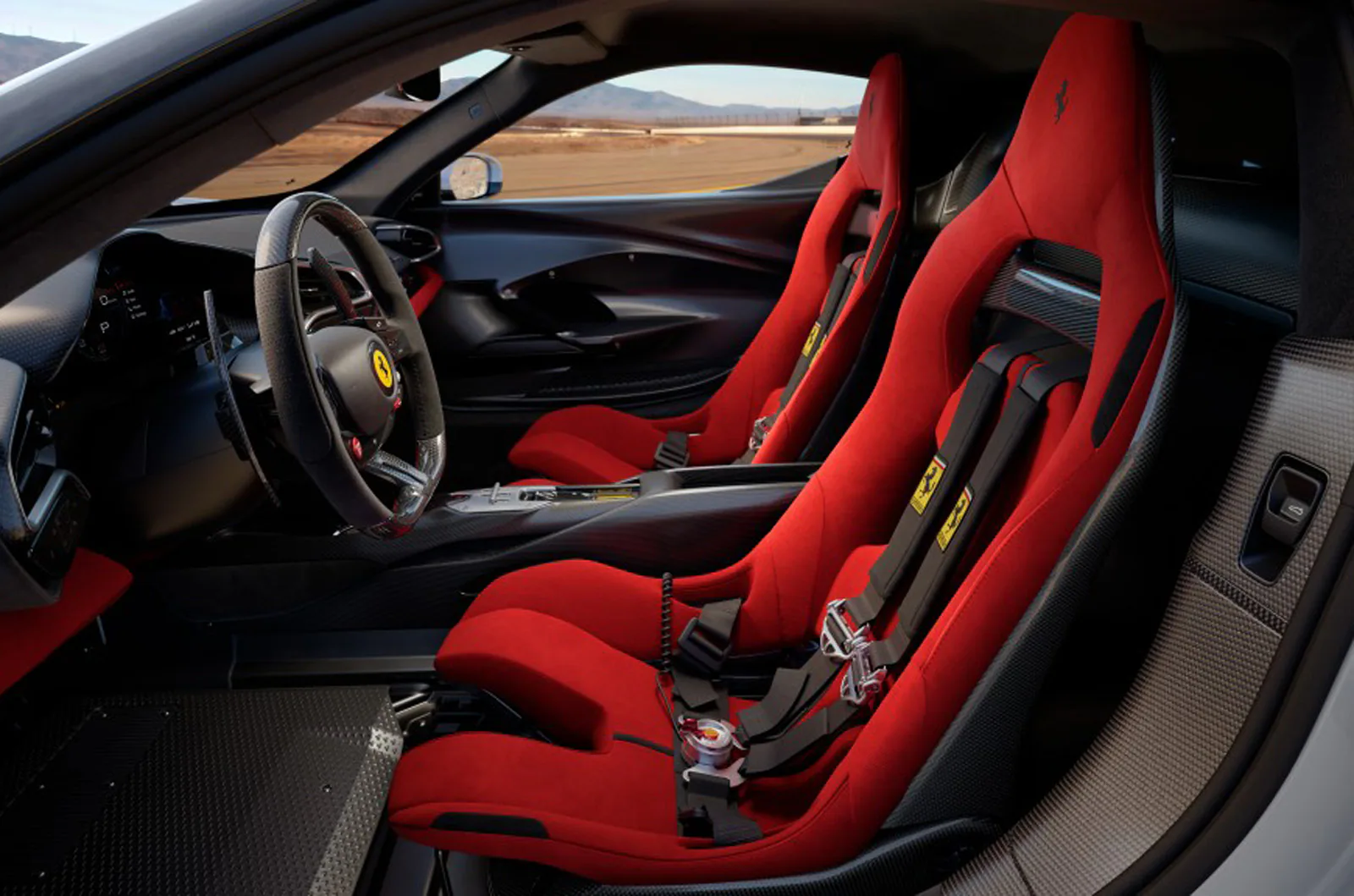
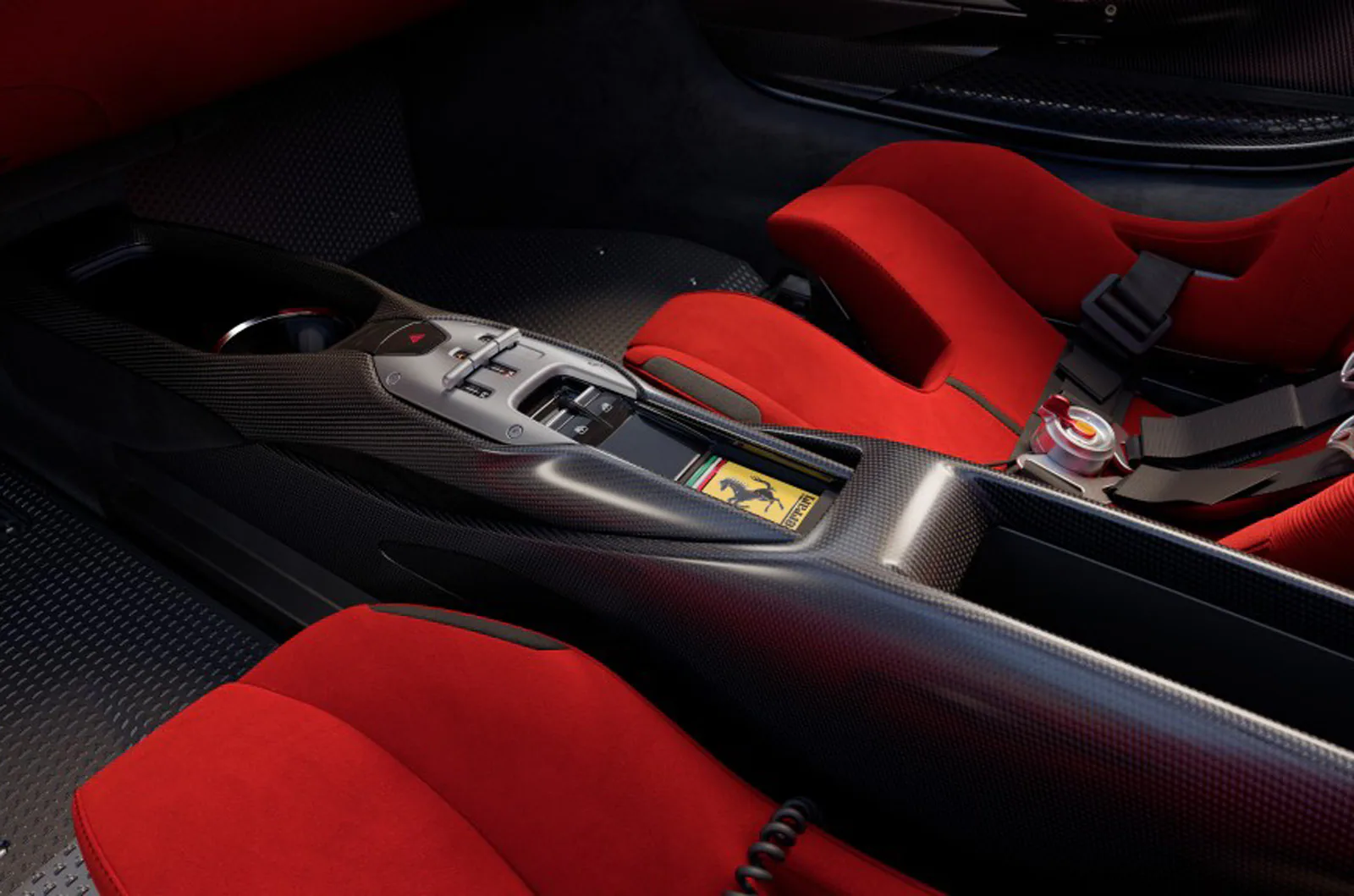
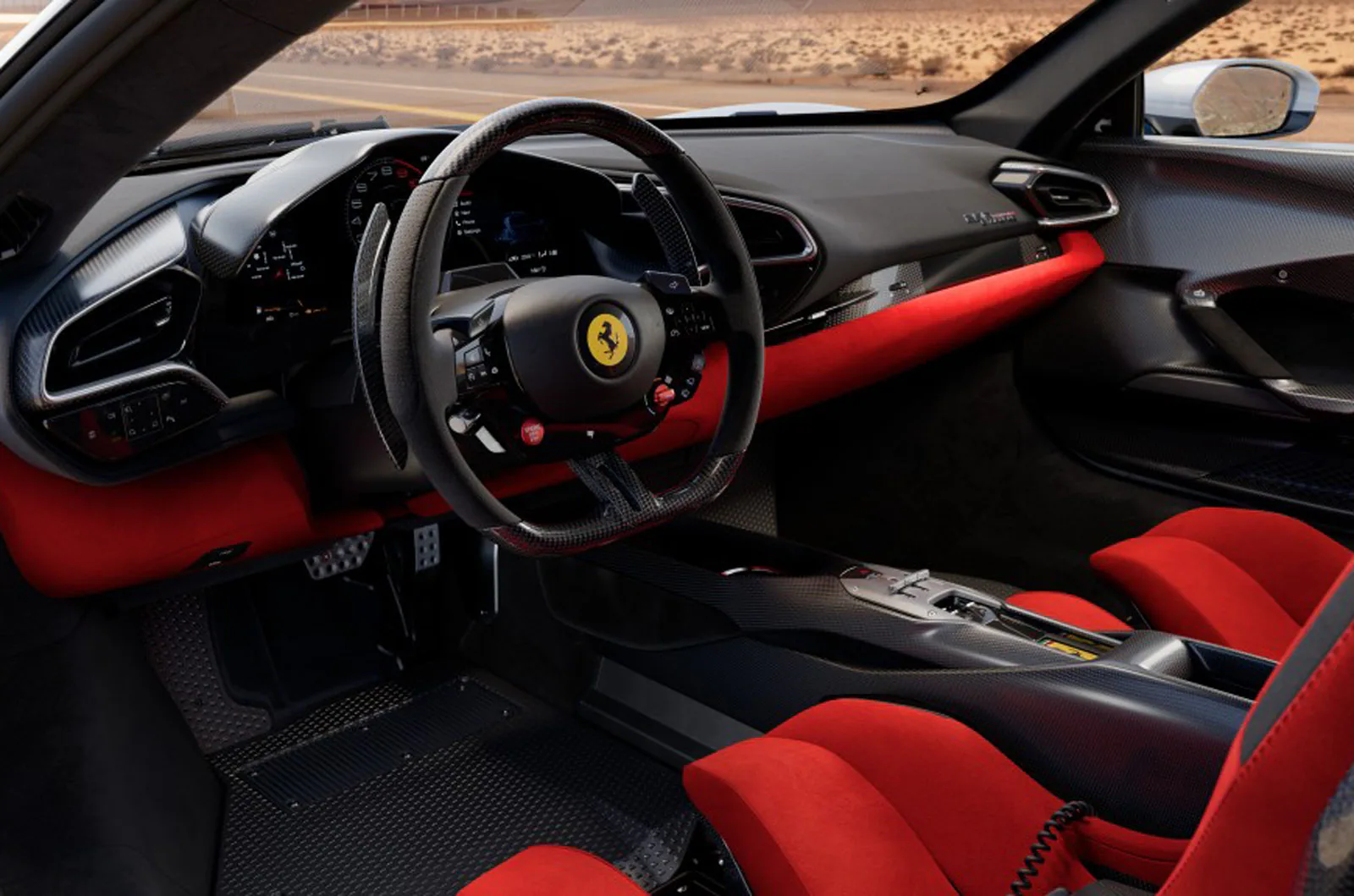
Inside, the 296 CS retains climate control, a stereo and wireless charging, but weight saving is visible in the one-piece carbon-fibre door panels, carbon-fibre centre console and lack of conventional armrests or storage pockets. Buyers can choose carbon-fibre seats and an even barer interior treatment that removes sections of carpet and trim beneath the seats, leaving elements of the chassis exposed. It is the sort of option likely to appeal to people who consider a carpet an unnecessary performance compromise.
Unlike the allocation-restricted 296 Speciale, Ferrari describes the Challenge Stradale as a regular-range model rather than a limited production special series. The company says it will therefore be available to buyers without an existing Ferrari ownership relationship, although that does not necessarily mean dealers will be casually stacking them beside the coffee machine.
Italian pricing is listed at €291,000. A UK price of approximately £260,000 has been reported, placing the CS broadly alongside the 296 GTB and below the 296 Speciale. US pricing has not been confirmed, while deliveries there are expected in late 2027. The related 296 Challenge Evo will enter Ferrari Challenge competition in Europe and North America in 2027, before reaching regional series in 2028.
Sources: Autocar, Car and Driver, Motor1.com, CarScoops and Road & Track